What Are the Top Types of Liquid Hydrogen Tanks?
Liquid hydrogen tanks are not simply oversized containers. They must hold hydrogen near −253°C while limiting heat transfer, managing pressure, and controlling boil-off. A bright metal wall may look simple from the outside. Inside, insulation, supports, seals, and pressure controls do demanding work. The details matter.
The main types include vacuum-insulated double-wall tanks, large spherical storage tanks, and cylindrical tanks installed horizontally or vertically. Mobile systems use designs shaped around vehicle space, weight, and operating needs; some use specialized lightweight construction. Each type makes different trade-offs in capacity, transport, installation, and thermal performance. A tank for a fueling station, for example, may prioritize reliable storage and access, while a vehicle tank must fit within a tight space. These categories can overlap, so labels alone do not tell the whole story.
This guide compares the leading liquid hydrogen tanks by structure and typical application. It also explains how insulation, tank geometry, pressure management, and boil-off handling affect real-world choices. Specifications matter more than appearance. There is no universal “best” tank: a design that suits a fixed industrial site may be impractical for transport. Even a well-designed system has limits, and those deserve attention rather than glossy promises. Understanding the trade-offs helps readers assess tank options more carefully and ask better questions about performance, safety features, and operating conditions.
How Liquid Hydrogen Tanks Maintain Cryogenic Conditions
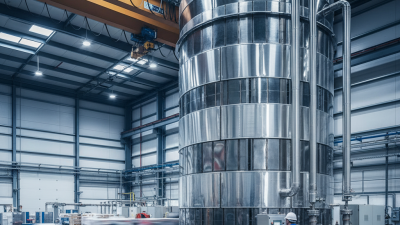
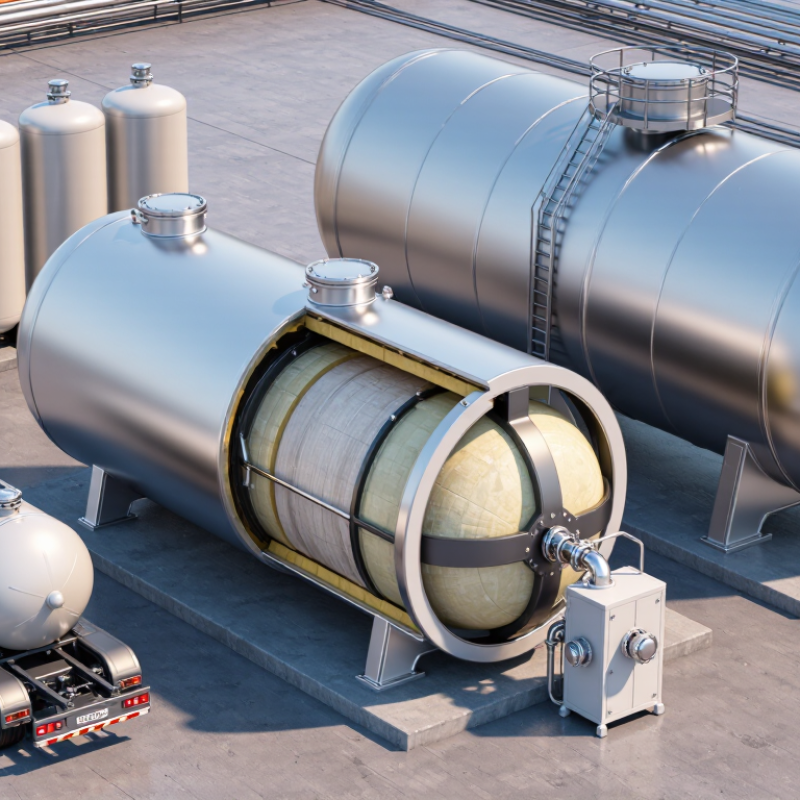
Liquid hydrogen stays liquid near 20.3 K, or −252.9°C, according to NIST Chemistry WebBook data. At this temperature, even modest heat entering a tank can cause evaporation and pressure to rise. Common designs use a double wall with a vacuum space, reflective multilayer insulation, and low-conductivity supports to limit heat transfer. NASA’s technical report SP-8109, Liquid Hydrogen, describes these insulation and tank-design considerations. Small details matter. Pipe connections, supports, and instrument lines can become heat bridges, so engineers monitor them alongside tank pressure and temperature.
Tips: Keep insulation dry and inspect vacuum performance. Track pressure trends, not just single readings; a steady rise can reveal heat leakage or changing operating conditions. Use approved pressure-relief systems and operating procedures. Never assume that thicker insulation alone solves boil-off.
No tank stops heat completely. Insulation reduces heat flow, while pressure management and, where appropriate, controlled venting address the vapor that still forms. Vacuum quality can degrade, and real-world measurements have uncertainty. That limitation deserves attention: storage duration depends on tank size, fill level, ambient conditions, and operational cycles, not insulation claims alone. NIST property data and NASA SP-8109 provide useful reference points, but tank-specific performance testing remains essential.
Vacuum-Insulated Cylindrical Tanks for Stationary Storage
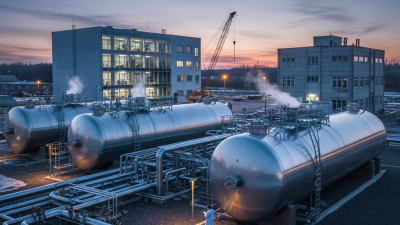
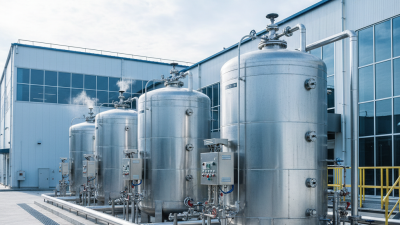
Vacuum-insulated cylindrical tanks are commonly used for stationary liquid hydrogen storage. Their inner vessel holds hydrogen near minus 253°C, while an outer shell surrounds it. The vacuum space reduces heat transfer from the warmer surroundings. Some designs also use layered insulation. The cylindrical shape distributes pressure evenly and suits large storage volumes.
Small details matter. Supports, pipe connections, and instrument lines can create paths for heat to enter. That heat can increase evaporation, so designers monitor tank pressure, temperature, and liquid level. Relief devices and suitable vent arrangements help manage pressure changes. Installation quality matters too. A well-designed vessel may still perform poorly if connections or insulation are handled carelessly. No design is perfect.
Tips: Check insulation condition and vacuum performance as part of routine maintenance. Keep clear records of pressure and temperature trends; gradual changes may reveal a developing issue. Confirm that instruments and relief systems are inspected by qualified personnel. Even then, readings need context. A single unusual value does not always tell the whole story.
What Are the Top Types of Liquid Hydrogen Tanks?
Vacuum-insulated cylindrical tanks are widely used for stationary liquid hydrogen storage. Their geometry can be compared with a sphere to illustrate how tank shape affects the surface area that needs insulation.
The chart compares idealized shapes with the same internal volume. Surface area is shown relative to a sphere (100%). Cylinders use length-to-diameter ratios of 2 and 4. These are geometric comparisons—not measured tank dimensions or performance data—and exclude supports, fittings, and other design details.
Mobile Tanks for Transporting Liquid Hydrogen
Mobile tanks are designed to move liquid hydrogen between production sites, terminals, and users. They use insulated, vacuum-jacketed vessels to keep hydrogen near its boiling point of −253°C. The U.S. Department of Energy’s hydrogen-delivery technical overview puts a typical liquid-hydrogen tanker’s payload at about 3,500 kilograms. That is far more hydrogen per trip than conventional compressed-gas tube trailers can carry. Useful, but not effortless.
The payload advantage matters most when destinations are far apart or demand is concentrated. A tanker arrives as a long, polished vessel, often mounted on a road trailer; transfer lines and couplings must be checked before unloading. Insulation slows heat gain, but cannot stop it completely. Some hydrogen may warm and boil off during storage or transport, so journey time, loading schedules, and receiving capacity all affect real delivery performance. A route calculation can look tidy. Field conditions rarely do.
The International Energy Agency’s Global Hydrogen Review 2024 reports that global hydrogen demand reached nearly 100 million tonnes in 2023. Most was produced and consumed near the same facilities, but wider trade could increase the need for transport infrastructure. Mobile cryogenic tanks can bridge that distance without pipelines. They also require specialized equipment, careful handling, and reliable cold-chain operations. Payload alone is not the full measure. Companies should compare delivered cost and losses across the entire route, not just the tank’s rated capacity.
Vehicle-Mounted Tanks for Hydrogen-Powered Applications
What Are the Top Types of Liquid Hydrogen Tanks?
Vehicle-Mounted Tanks for Hydrogen-Powered Applications
Vehicle-mounted liquid hydrogen tanks are designed for applications where long range and high onboard energy capacity matter. They commonly use a double-wall vessel with vacuum insulation to limit heat transfer. The tank must also manage pressure as a small amount of liquid hydrogen warms and turns into gas. The U.S. Department of Energy reports that liquid hydrogen is stored near −253°C and has a density of about 70.8 kg per cubic metre. That high density can help vehicles carry more hydrogen in a compact space, but insulation, venting, and safe system integration add weight and complexity. A tank is only one part of the design.
Heavy-duty trucks, buses, and specialized work vehicles may benefit when refuelling time and operating range are priorities. NREL’s hydrogen-delivery analyses examine liquefaction and delivery as energy-intensive parts of the supply chain, so vehicle efficiency depends on more than tank capacity. Real-world performance also varies with ambient temperature, vehicle use, and time parked. These trade-offs deserve more attention than they often receive.
Tips: Check usable hydrogen capacity, not just tank volume. Ask how the system controls pressure during long stops, and confirm that mounting points protect the tank from vibration and road impact. A practical detail: inspect insulation and connections on a regular service schedule.
Sources: U.S. Department of Energy, Hydrogen Storage; National Renewable Energy Laboratory, Hydrogen Delivery Scenario Analysis Model (HDSAM).