Choosing a reliable large liquid nitrogen storage tank supplier in China requires more than comparing prices. Buyers must examine engineering capability, manufacturing controls, inspection records, and long-term service support. A polished website is not proof.
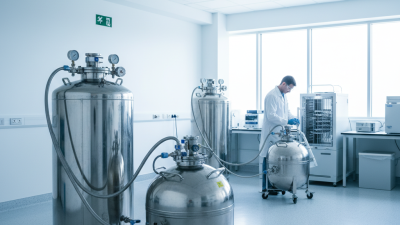
This guide introduces leading Chinese suppliers through practical evaluation criteria. It considers tank capacity, vacuum insulation, stainless-steel quality, pressure stability, and usable holding time. These details affect daily operations in laboratories, hospitals, food facilities, and industrial plants. A well-designed tank should maintain low temperatures with limited nitrogen loss. Its valves, gauges, safety devices, and filling connections also deserve close attention.
Factory experience matters. Suppliers with documented projects can often explain installation challenges more clearly. They may provide drawings, material certificates, pressure-test reports, and operating instructions. Independent inspection can strengthen confidence before shipment. Buyers should also confirm welding standards, surface treatment, warranty terms, spare-parts availability, and technician response times.
Small details matter.
Supplier rankings can change as certifications, production capacity, and service performance develop. No list remains permanently correct. Some manufacturers present impressive specifications but offer limited after-sales support. Others may have less marketing visibility yet deliver consistent engineering work. This guide therefore encourages evidence-based comparison rather than relying on claims alone. Request recent references, verify technical documents, and match the tank design with actual storage conditions. A careful review reduces purchasing risks and supports safer, more efficient nitrogen management.
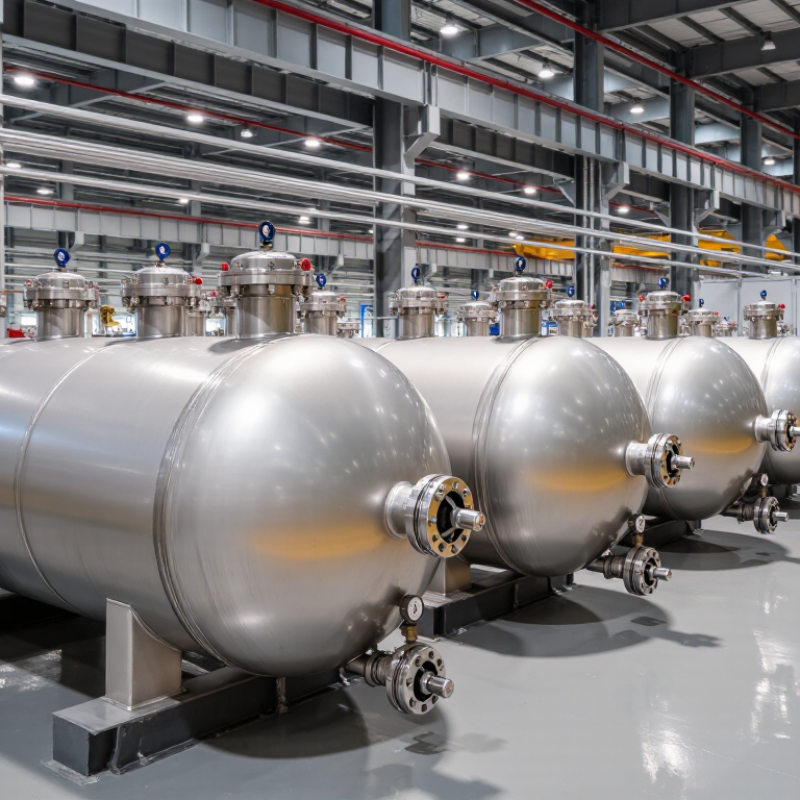
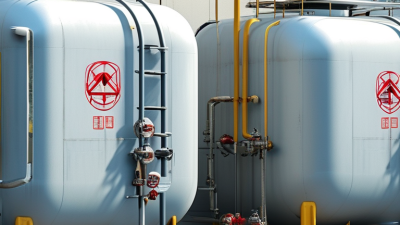
Large liquid nitrogen storage tanks are insulated vessels designed to hold cryogenic nitrogen in its liquid state. Liquid nitrogen remains extremely cold, near minus 196 degrees Celsius. A large tank usually combines a strong inner vessel, an outer shell, and vacuum insulation. This structure slows heat transfer and reduces nitrogen loss through evaporation.
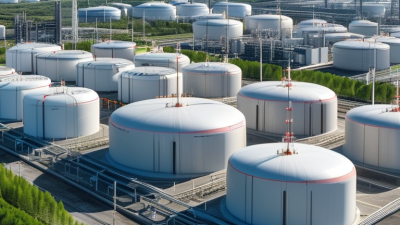
These tanks support hospitals, laboratories, food processing facilities, metal operations, and industrial gas systems. Capacities may range from several thousand to hundreds of thousands of liters. Their size depends on daily consumption, delivery schedules, site space, and emergency reserves. Bigger is not always better. Poor sizing can increase holding costs and create unnecessary pressure management work.
Reliable designs include pressure relief devices, level indicators, vacuum monitoring, and controlled filling connections. Some facilities add remote sensors for liquid level and pressure readings. Operators must also plan ventilation because released nitrogen can displace breathable oxygen indoors. Warning signs and oxygen monitoring are practical safeguards. Experienced installers inspect foundations, piping, clearances, and vehicle access before commissioning. That step is easy to underestimate.
Maintenance requires regular inspection of valves, gauges, insulation performance, and safety equipment. A damaged vacuum jacket may raise evaporation rates noticeably. Tank records should document inspections and unusual pressure changes. Standards and local safety requirements must guide each installation. Even experienced teams can miss small details during busy production periods. Careful review still matters.
Technical reference table for evaluating large liquid nitrogen storage tanks and qualified suppliers. Values shown are typical engineering ranges and must be confirmed against the applicable design code, site conditions, and project specification.
| Evaluation Dimension | Typical Data or Requirement | Technical Description | Why It Matters When Selecting a Supplier |
|---|---|---|---|
| Equipment Definition | Stationary vacuum-insulated cryogenic storage vessel | Designed to store nitrogen in liquid form at cryogenic temperature, normally near its atmospheric boiling point of −196 °C. | Confirms that the proposed equipment is intended for bulk, long-term storage rather than laboratory dewars or transport cylinders. |
| Common Nominal Capacity | 5,000–100,000 L | Large installations may be engineered above this range, while the final usable volume is normally lower than the geometric vessel volume. | The supplier should provide both geometric capacity and maximum permitted filling volume for safe operation. |
| Typical Working Fill Level | Approximately 85%–95% of geometric volume | Allowing vapor space helps accommodate liquid expansion, pressure control, and safe filling operations. The exact limit is determined by the approved design. | Prevents comparison based only on nominal volume and supports accurate calculation of usable nitrogen inventory. |
| Inner Vessel Material | Cryogenic stainless steel, commonly austenitic grades | The inner vessel must retain adequate toughness and strength at cryogenic temperatures. Austenitic stainless steels are widely used for this service. | Material certificates, weld procedures, and low-temperature suitability are essential for safety and service life. |
| Outer Vessel Material | Carbon steel or stainless steel, depending on design | The outer shell protects the insulation system and provides structural support. Surface treatment is normally required for carbon-steel shells. | Material selection affects corrosion resistance, maintenance requirements, installation conditions, and total cost. |
| Insulation System | High-vacuum multilayer insulation | A vacuum space combined with reflective multilayer insulation significantly reduces heat transfer and liquid boil-off compared with non-vacuum designs. | Vacuum stability, insulation quality, and measured heat leakage are key indicators of storage performance. |
| Operating Temperature | Approximately −196 °C for liquid nitrogen | Liquid nitrogen is a cryogenic fluid. Temperature varies with pressure, liquid level, ambient heat input, and operating conditions. | All valves, gauges, seals, piping, and instruments must be rated for cryogenic temperatures. |
| Typical Design Pressure | Commonly about 0.8–2.2 MPa, project dependent | Design and working pressures vary widely according to the storage, pressure-building, filling, and distribution requirements. | Pressure ratings must be verified from the nameplate, drawings, relief-device settings, and approved calculations rather than assumed from capacity. |
| Pressure-Building System | Pressure-building coil with regulator and control valves | A controlled portion of liquid nitrogen is vaporized through a heat exchanger to maintain vessel pressure for downstream supply. | A correctly sized system helps maintain stable outlet pressure without excessive venting or unnecessary product loss. |
| Safety Relief Protection | Relief valves and, where required, rupture-disc protection | Pressure-relief devices protect the inner vessel and connected piping from excessive pressure caused by heat input, blocked-in liquid, or abnormal operation. | Relief capacity, set pressure, discharge routing, inspection access, and compliance documentation should be reviewed before purchase. |
| Boil-Off Performance | Often specified as a percentage of tank volume per day | Static evaporation depends on vessel size, insulation quality, vacuum condition, ambient temperature, fittings, and operating pattern. A larger vessel generally has a lower surface-area-to-volume ratio. | Ask for a clearly defined guaranteed or tested evaporation rate with the measurement conditions stated. |
| Liquid-Level Measurement | Differential-pressure level gauge or electronic level transmitter | Level instruments estimate liquid inventory through pressure difference or another cryogenic measurement method and may provide local and remote signals. | Measurement range, accuracy, calibration method, alarm outputs, and compatibility with the control system affect operational reliability. |
| Typical Connections | Fill, liquid outlet, gas outlet, vent, drain, pressure-building, and instrument connections | Connection size and arrangement depend on filling rate, withdrawal rate, delivery pressure, piping layout, and emergency requirements. | Connection drawings should be approved before fabrication to avoid costly field modifications. |
| Applicable Design Codes | ASME Section VIII, EN 13458, ISO 21009, or applicable national regulations | The governing code depends on the installation country, pressure classification, vessel design, and project contract. Chinese projects may also require applicable national or industry standards. | Specify the required code before quotation and request design calculations, inspection records, and certification matching that code. |
| Manufacturing Quality Controls | Welding qualification, non-destructive testing, pressure testing, vacuum testing, and cleanliness control | Important controls may include radiographic or ultrasonic examination, helium leak testing, vacuum retention testing, dimensional inspection, and cryogenic-service cleaning. | Complete quality records provide evidence that the tank is suitable for oxygen-free cryogenic nitrogen service and long-term operation. |
| Installation Requirements | Level foundation, protected location, adequate ventilation, and safe separation distances | Liquid nitrogen can displace oxygen and create an asphyxiation hazard. The installation normally requires ventilation, oxygen monitoring where appropriate, vehicle protection, and controlled access. | A supplier should provide foundation loads, lifting information, piping interfaces, safety documentation, and installation guidance. |
| Typical Applications | Industrial gas supply, food processing, laboratories, healthcare, electronics, metal processing, and cryogenic manufacturing | Large tanks support continuous or high-volume nitrogen use through liquid withdrawal, gaseous withdrawal, or an external vaporization system. | The correct tank configuration depends on peak demand, average demand, required autonomy, delivery method, and pressure stability. |
| Supplier Selection Evidence | Technical proposal, drawings, code certification, inspection plan, warranty, and after-sales support | A complete supplier package should state capacity, design pressure, operating pressure, evaporation performance, materials, accessories, testing, delivery scope, and commissioning responsibilities. | Comparing documented specifications rather than price alone helps identify technically qualified large-tank manufacturers and reduces lifecycle risk. |
Technical note: Liquid nitrogen is extremely cold and can cause severe cold burns. Nitrogen gas can reduce oxygen concentration without warning. Tank design, installation, operation, inspection, and maintenance should be performed by qualified personnel in accordance with local regulations and the approved equipment documentation.