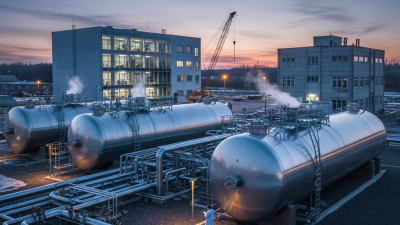
Choosing the right LN2 supply tank is crucial for various applications. Liquid nitrogen serves essential roles in industries like healthcare, food processing, and scientific research. The correct tank will ensure efficiency and safety in usage.
When selecting an LN2 supply tank, you should consider capacity, insulation, and mobility. A well-insulated tank will preserve the liquid nitrogen longer and reduce waste. However, larger tanks are not always better. Sometimes, a smaller tank may suit specific needs more effectively.
It’s also important to assess your specific requirements. Reflect on how often you will use the tank and in what environment. Will you need portability? Could you manage a larger tank? These choices can impact your workflow and safety. The right LN2 supply tank should match your application perfectly, providing both performance and reliability.
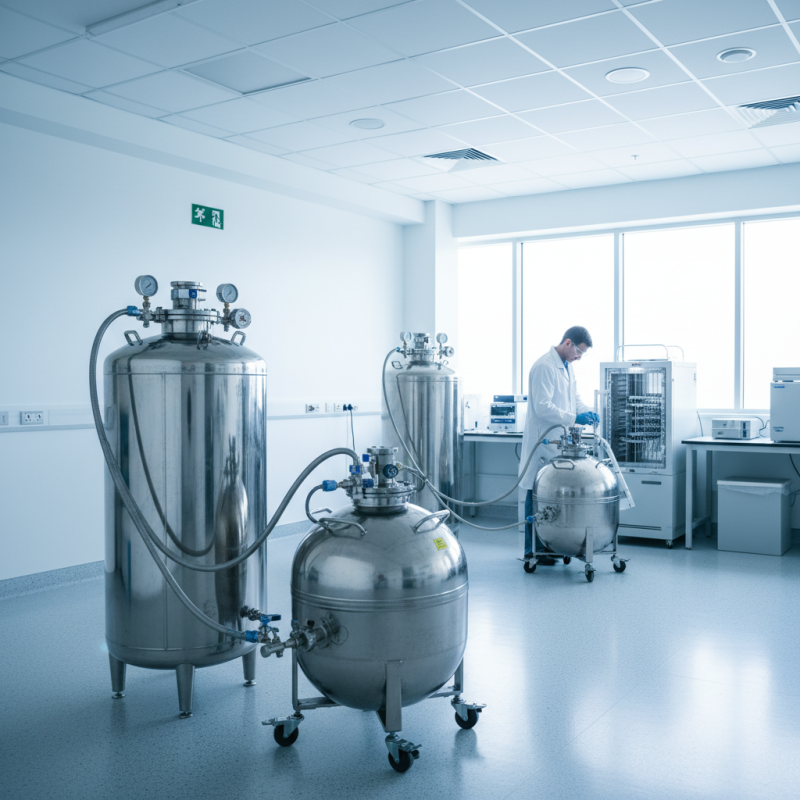
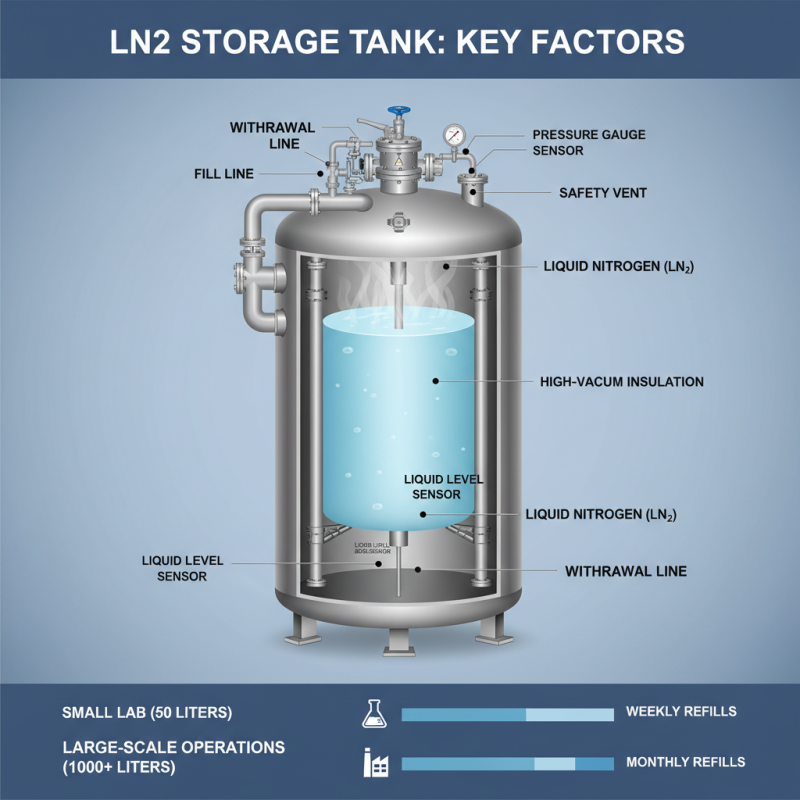
Understanding the basics of LN2 (liquid nitrogen) supply tanks is essential for any operation that requires this vital resource. LN2 is widely used in cryogenics, food preservation, and multiple scientific applications. The tanks are designed to store nitrogen at extremely low temperatures. Their construction is crucial for maintaining the required temperature and pressure.
Choosing the right LN2 supply tank involves several considerations. The tank size matters for your specific needs. Smaller tanks are portable, while larger tanks are suited for bulk storage. It's vital to assess your consumption rate to ensure efficiency. You may find that too small a tank leads to frequent refills, which can be inconvenient. On the other hand, an oversized tank could result in unnecessary costs.
Another important aspect is safety features. Not all tanks have the same safety mechanisms. Proper insulation, pressure relief valves, and ergonomic designs enhance usability but require careful examination. Often, users overlook the importance of thorough research. Failure to evaluate different options can lead to poor choices.
Lastly, maintenance is an area that needs attention. Regular checks for leaks and insulation integrity are necessary. Neglecting maintenance can result in dangerous situations and costly damage. While these tanks may seem straightforward, their complexity should not be underestimated. Taking time to understand all factors is a wise step.
| Feature | Small Tank (100L) | Medium Tank (500L) | Large Tank (1000L) |
|---|---|---|---|
| Capacity | 100 Liters | 500 Liters | 1000 Liters |
| Dimensions (L x W x H) | 1.2m x 0.5m x 1.5m | 2.5m x 1.0m x 1.8m | 3.0m x 1.5m x 2.1m |
| Weight | 150 kg | 450 kg | 800 kg |
| Insulation Type | Vacuum Insulated | Vacuum Insulated | Vacuum Insulated |
| Typical Applications | Laboratories, Small-scale Research | Industrial, Biobanking | Medical Facilities, Large-scale Research |
| Estimated Cost | $2,500 | $7,500 | $15,000 |

When evaluating your specific LN2 storage requirements, several factors come into play. The primary consideration is the volume of liquid nitrogen you need. According to industry reports, users often require tanks that range from 50 liters for small labs to over 1000 liters for large-scale operations. The size directly impacts how often you'll need to refill the tank. A smaller tank may need weekly refills, while larger tanks can last for months, depending on usage.
Another crucial aspect is the insulation type. Tanks with superior insulation prevent nitrogen loss while ensuring safety. Reports indicate that poorly insulated tanks can lose up to 10% of their contents monthly. Users sometimes overlook this when choosing a tank, which can lead to increased operational costs. The need for regular monitoring also emerges as a significant concern. A neglected tank can lead to dangerous over-pressurization or even leaks.
Space allocation is another point requiring careful consideration. Many users underestimate the space needed for tank access and maintenance. Ensure that your facility can accommodate the tank's size and its safety requirements. It’s vital to conduct thorough assessments of your workflow to avoid any mishaps in the future. Selecting the wrong tank may not only lead to inefficiencies but also pose safety risks.
When selecting the right LN2 supply tank, it’s important to understand the different types available. Cryogenic tanks come in various sizes and designs, each suited for specific applications. Some tanks are portable, while others are stationary.
Portable tanks are great for smaller operations. They are easier to transport and can be used in varied locations.
Static tanks, on the other hand, hold larger volumes of liquid nitrogen. They are ideal for labs or industries that require continuous supply. However, they take up more space and require careful installation.
In addition, the maintenance of stationary tanks can be complex. Both tank types need regular inspections to ensure safety. Neglecting this can lead to costly repairs or even hazards.
Another consideration is insulation. The effectiveness of insulation affects how well a tank retains temperature. Some tanks may not perform optimally, leading to increased evaporation. It’s essential to factor in this aspect when making a choice. Evaluating your specific needs and usage frequency will help you avoid common pitfalls. Choosing the right LN2 tank is not just about size; it’s about understanding your particular requirements.
When selecting a liquid nitrogen (LN2) supply tank, safety features are paramount. Tanks should have sturdy construction to withstand pressure. Look for tanks with double-wall insulation. This design minimizes the risk of temperature fluctuations and spills. Additionally, a protective outer layer can prevent accidental damage.
Regulations are crucial in ensuring safety. Compliance with local standards is essential. Check if the tank meets the relevant safety certifications. Labels should clearly indicate the operating parameters. Moreover, pressure relief valves are vital. These valves prevent over-pressurization, which may lead to dangerous situations. Users should not overlook the importance of proper training in handling LN2.
Reflecting on past incidents can inform better safety practices. Some may not realize the significance of regular maintenance. Tanks that are not serviced can become a liability. It's a reminder that safety isn't just about function. It's about awareness and responsibility too. Keeping informed about the latest regulations is a continuous journey. It's easy to forget, but it shouldn't be.
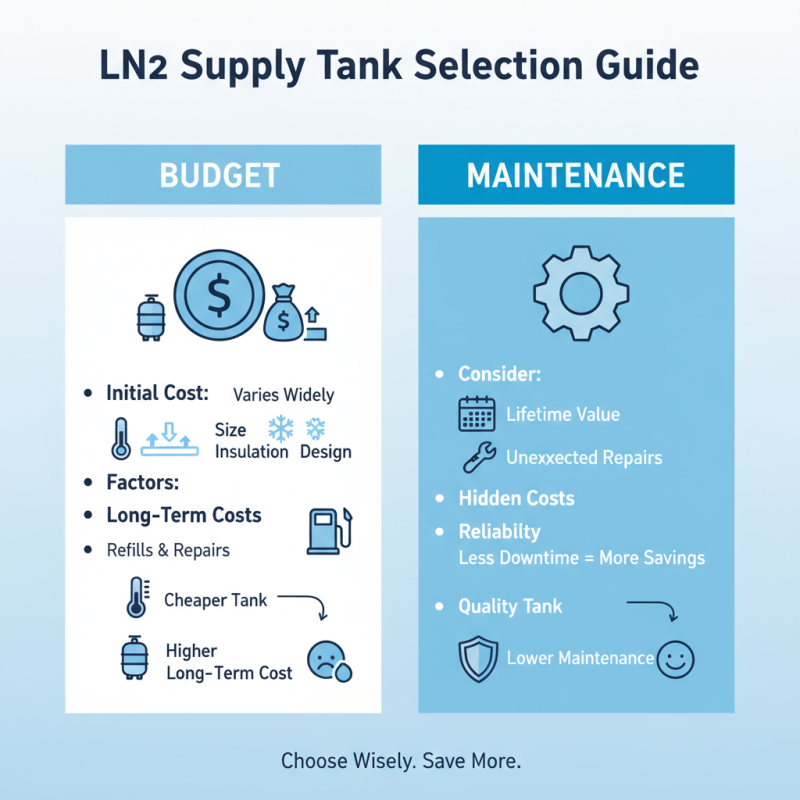
When selecting an LN2 supply tank, budget and maintenance are crucial. A clear budget helps narrow down options. Prices can vary widely based on tank size, insulation, and design. Don’t forget to consider long-term costs, like refills and repairs. A cheaper tank may save money initially, but higher maintenance costs can add up.
Maintenance needs are just as important. Regular checks ensure safety and efficiency. Tanks require inspections for leaks and insulation wear. These inspections might seem tedious. However, neglecting them can lead to serious issues. Think about your team's capability to perform maintenance. Some may need training, which incurs extra costs. Balancing quality with affordability is key. Be prepared to invest in a reliable tank that meets your needs without breaking the bank.