How to Choose the Best Dewar Tank for Liquid Nitrogen?
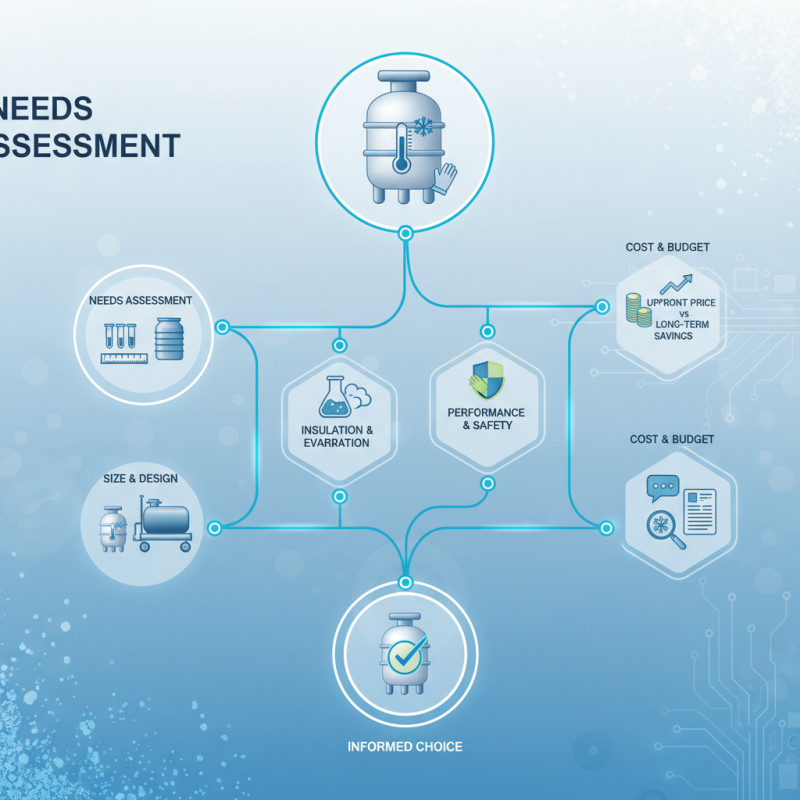
When considering a dewar tank for liquid nitrogen, it is crucial to understand your needs. A dewar tank is designed to store and transport cryogens like liquid nitrogen. Choosing the right one can be daunting.
Different sizes and designs exist in the market. Each serves a specific purpose. Are you storing small samples or large quantities? The tank's capacity is vital for your operations. It is equally important to think about insulation and evaporation rates.
Cost is an essential factor. High-quality tanks may have a higher upfront price but offer better performance. Additionally, read reviews and reflect on your budget. Consider both short-term and long-term needs. A good decision will save expenses in the future. A dewar tank for liquid nitrogen should meet your expectations and ensure safety. Making an informed choice will enhance your experience.
Understanding Dewar Tanks and Their Applications for Liquid Nitrogen
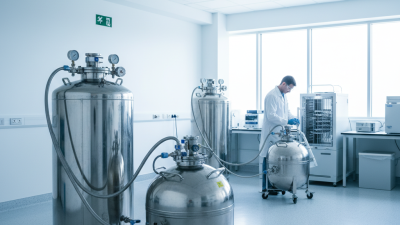
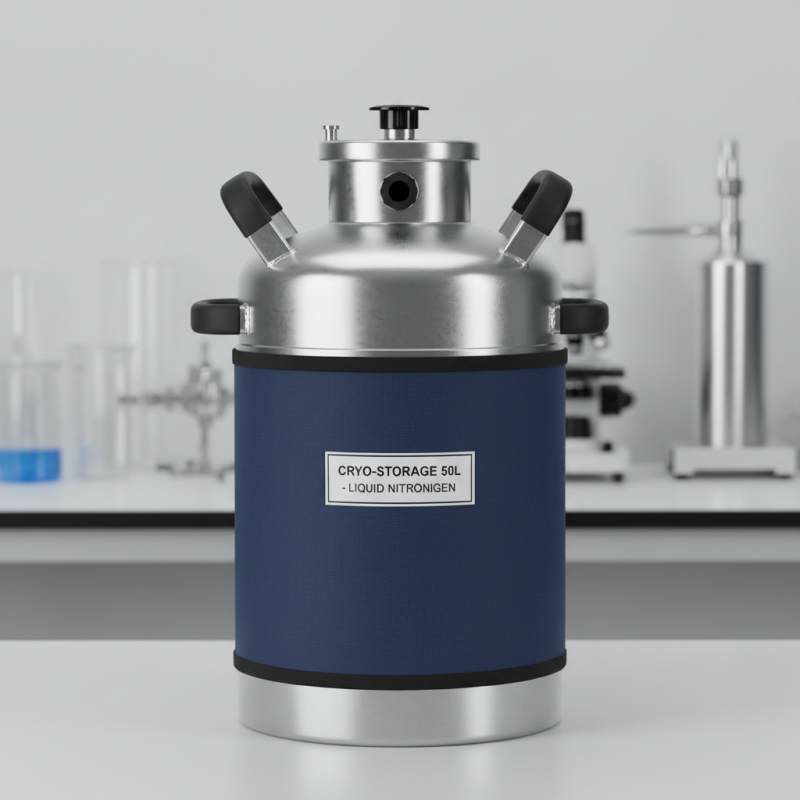
Dewar tanks are essential for storing liquid nitrogen. They are vacuum-insulated containers that keep the liquid at very low temperatures. These tanks come in various sizes, suitable for different applications in laboratories and industries. Understanding your needs is crucial when selecting a Dewar tank.
Consider how much liquid nitrogen you require. Smaller tanks are portable but may need frequent refills. Larger tanks hold more but can be cumbersome. Remember, though, that larger isn't always better. Think about the space and handling. If your lab is tight on space, a smaller, more manageable tank might be ideal.
Tips: Always check the tank’s insulation. A poorly insulated tank can lead to nitrogen loss and inefficiency. Maintenance is key. Regularly inspect fittings and seals for leaks. Additionally, familiarize yourself with emergency procedures. Safety should always be a priority when dealing with cryogenic materials.
How to Choose the Best Dewar Tank for Liquid Nitrogen? - Understanding Dewar Tanks and Their Applications for Liquid Nitrogen
| Dewar Tank Type |
Capacity (Liters) |
Weight (kg) |
Design (Vertical/Horizontal) |
Insulation Type |
Typical Applications |
| Standard Dewar |
10 |
5 |
Vertical |
Vacuum |
Laboratory research, cryopreservation |
| Large Capacity Dewar |
50 |
20 |
Vertical |
High-vacuum |
Industrial applications, large-scale storage |
| Transport Dewar |
2 |
3 |
Horizontal |
Insulated |
Transporting liquid nitrogen for medical use |
| Mini Dewar |
1 |
1 |
Vertical |
Foam |
Cryogenic experiments, small sample storage |
Key Factors to Consider When Selecting a Dewar Tank
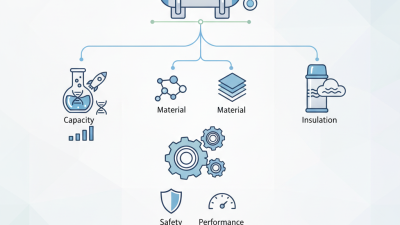
Choosing the right dewar tank for liquid nitrogen requires careful consideration of several key factors. One of the most important aspects is the tank's capacity. Dewar tanks are available in various sizes, ranging from small portable units to large stationary ones. A report from the Cryogenic Engineering Conference indicates that selecting a size that meets your needs while allowing for future growth is essential.
Insulation efficiency is another critical factor. Dewars are designed to minimize heat transfer, keeping liquid nitrogen at its low temperatures. Look for tanks with high-quality vacuum insulation. This can significantly reduce nitrogen evaporation losses, which can reach up to 2-3% per day in poorly insulated tanks.
Tip: Always check the manufacturer's specs for insulation performance.
Material is also vital. Stainless steel is commonly used for durability and corrosion resistance. However, some tanks may use aluminum. Consider the environment where the tank will be used. Issues like exposure to chemicals can lead to unexpected degradation.
Tip: Evaluate the potential risks of the storage environment.
Safety features should not be overlooked, either. Proper pressure relief valves and secure closures are essential to prevent accidents. Regular maintenance is crucial for ensuring operational safety.
In the end, it’s important to reflect on your actual needs. Sometimes, larger or more complex solutions are chosen without considering simpler alternatives that could also suffice.
Comparing Different Types of Dewar Tanks for Liquid Nitrogen Storage
When selecting a Dewar tank for liquid nitrogen storage, consider various types. Each type has unique features, advantages, and potential drawbacks. Glass Dewar tanks are excellent for small-scale storage. They offer superior insulation but are fragile. Metal Dewar tanks are durable and widely used. They can withstand rough handling but may not insulate as well as their glass counterparts.
Tips: Always check the tank’s capacity. Small tanks are ideal for lab environments. Larger tanks suit industrial applications. Evaluate the vacuum quality. A high-quality vacuum ensures better thermal retention. Look for safety features, like pressure relief valves.
Liquid nitrogen storage requires careful handling. Some Dewar tanks can leak. This can lead to dangerous situations. Be mindful of the weight. While larger tanks store more, they can be cumbersome. Reflect on your specific needs before choosing. Assess if your application leans toward portability or volume.
Comparison of Different Types of Dewar Tanks for Liquid Nitrogen Storage
Safety Features and Maintenance Considerations for Dewar Tanks
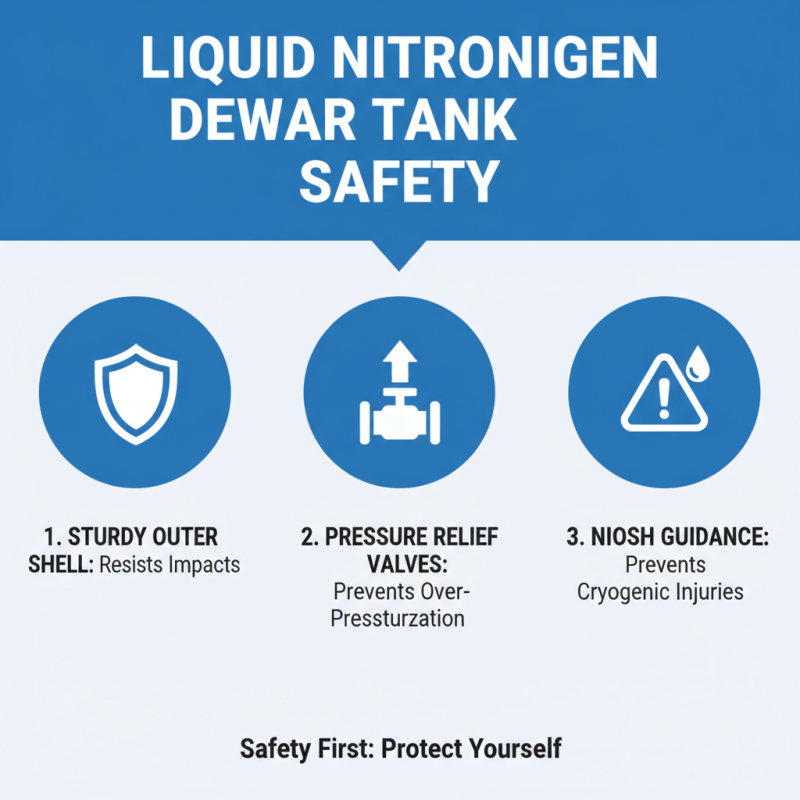
When selecting a Dewar tank for liquid nitrogen, safety features are paramount. A well-constructed tank should have a sturdy outer shell to withstand drops or impacts. It’s essential to look for models with pressure relief valves. These valves prevent dangerous over-pressurization, a critical concern for liquid nitrogen storage. According to the National Institute for Occupational Safety and Health (NIOSH), incidents involving cryogenic liquids can cause significant injuries if not properly managed.
Regular maintenance is crucial. Dewar tanks require periodic inspections to check for leaks and signs of wear. Storage conditions also matter. Keep the tanks in cool, dry places away from flammable materials. Visual inspections should happen at least once a month. A study by the Occupational Safety and Health Administration (OSHA) emphasizes that inadequate maintenance can lead to catastrophic failure, resulting in both financial and safety risks.
Understanding the specifics of your Dewar tank increases safety and efficiency. While many features focus on performance, some aspects, like insulation quality, can be overlooked. Proper insulation reduces evaporation rates and saves costs. However, it’s common to find tanks with inadequate insulation, leading to unnecessary nitrogen wastage. Regularly reviewing equipment performance against industry benchmarks can prevent these oversights.
Cost Analysis: Budgeting for Your Liquid Nitrogen Dewar Tank
When considering the purchase of a Dewar tank for liquid nitrogen, budgeting plays a crucial role. The initial cost for a standard Dewar tank can range from $500 to $2,500. This price varies based on factors like size, insulation quality, and manufacturing materials. A larger capacity tank naturally costs more. Therefore, it’s essential to evaluate what volume you actually need.
Operating costs should also be considered. According to industry reports, users spend about $50 to $300 monthly for liquid nitrogen, depending on usage. Over time, these costs can accumulate. If your needs are fluctuating, leasing could be a more cost-effective choice than buying. This flexibility can help manage budget constraints effectively.
Maintenance is another critical factor. Regular inspections and potential repairs add to overall expenses. A poorly maintained tank can lead to inflated costs due to efficiency losses. Investing in quality equipment might incur a higher upfront cost but it can result in lower maintenance and operational costs in the long run.