Blog

What Is the Best Cryogenic Hydrogen Storage Tank in 2026?

Choosing the best cryogenic hydrogen storage tank in 2026 is not a simple contest of capacity. It means balancing heat leak, boil-off, pressure control, tank weight, durability, and operating cost. Liquid hydrogen must remain near 20 kelvin, roughly −253°C. Even a small insulation weakness can warm the contents and raise tank pressure. Cold surfaces matter. So do valves, supports, and pipe connections.

The International Energy Agency’s Global Hydrogen Review 2024 reports that global hydrogen demand reached almost 97 million tonnes in 2023. Yet low-emissions hydrogen still represented less than 1% of production. That gap makes practical storage important, but it does not make every application identical. A stationary buffer tank, a transport vessel, and an aerospace system face different duty cycles and design constraints. NASA cryogenic-insulation specialist James Fesmire’s published work points to a useful principle: thermal performance depends on the complete insulation system and its operating conditions, not on a material claim alone. That distinction deserves attention.

This guide compares tank designs through measurable criteria: usable capacity, evaporation rate, vacuum integrity, structural mass, service requirements, and safety features. It also separates demonstrated performance from marketing language. A headline capacity figure can hide substantial losses over time. No single tank wins everywhere. The honest answer may be less satisfying: the best choice depends on where hydrogen is stored, how long it remains there, and how often the tank cycles. Those details change the result.
What Is the Best Cryogenic Hydrogen Storage Tank in 2026?

How Cryogenic Hydrogen Storage Tanks Work

How Cryogenic Hydrogen Storage Tanks Work

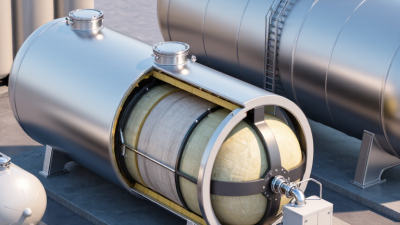
A cryogenic hydrogen tank stores hydrogen as a liquid near 20 K, or −253°C. Cooling greatly increases the amount held in a given volume. The U.S. Department of Energy’s hydrogen-storage technical overview gives liquid hydrogen a density of about 70.8 kg/m³. A typical tank uses an inner vessel, a vacuum-insulated space, and reflective insulation to limit heat entering from the surroundings. Even tiny heat leaks matter. They can warm the liquid and create boil-off gas, which raises pressure and must be safely managed.

Tank performance depends on more than insulation. Design choices affect usable capacity, boil-off, refueling time, and operating complexity. NASA technical publications on cryogenic fluid management discuss heat leak and vapor control as persistent engineering challenges. In practice, the “best” tank depends on how often it is filled, how long it sits, and whether boil-off can be used. There is no universal winner. Some designs also look better on paper than they perform in daily service.

Tips: Check the rated pressure, insulation method, and boil-off data under realistic storage conditions. Ask how pressure relief and vent routing are handled. Compare carefully. Test results may not reflect every site’s weather or operating pattern.
Which Tank Designs Are Available in 2026?

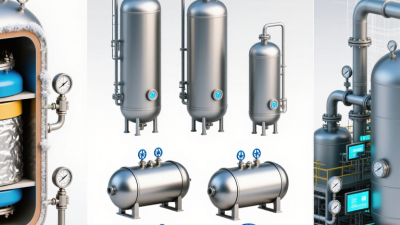
In 2026, three design families shape cryogenic hydrogen storage: vacuum-insulated liquid tanks, cryo-compressed vessels, and composite tanks under development for specialized applications.

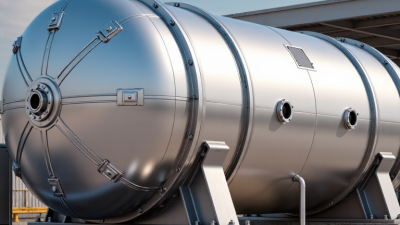
Conventional liquid-hydrogen tanks use inner and outer walls, with a vacuum and reflective insulation between them. The familiar details matter: long necks, welded joints, support struts, and valves can all admit heat. Not trivial.

At hydrogen’s normal boiling point, about 20.3 K, its density is roughly 70.8 kg/m³, according to NIST thermophysical data. That compactness comes with a penalty: the International Energy Agency’s Future of Hydrogen report estimates liquefaction uses around 30% of hydrogen’s energy content.

Cryo-compressed tanks combine low temperature with pressure containment, potentially delaying boil-off while storing denser hydrogen than ordinary compressed-gas vessels. They require heavier, more complex insulation and pressure hardware. Composite cryogenic tanks can reduce mass, but liner behavior, permeation, and repeated thermal cycling remain design concerns. They are not all mature, standard products.

For stationary sites and transport, double-wall tanks remain the established option; vehicle and aerospace systems face tighter mass and packaging limits. A tank’s useful capacity depends on heat leak, operating pressure, vent management, and the time hydrogen must remain stored—not just its advertised volume.

What Performance and Safety Criteria Matter Most?

A strong cryogenic hydrogen tank is not simply the one with the lowest boil-off figure. At hydrogen’s normal boiling point, about −253°C, even small heat leaks can warm the liquid and raise tank pressure. NIST thermophysical data place liquid hydrogen’s density near 70.8 kg/m³, making usable volume and insulation performance central design measures. Ask for boil-off data under stated ambient temperatures, fill levels, and idle durations—not a best-case laboratory number. No single metric settles it.

Safety depends on what happens when conditions change. Check vacuum-jacket durability, pressure-relief capacity, vent direction, leak detection, and performance after repeated fill-and-withdraw cycles. A relief valve is not a substitute for safe vent routing. The U.S. Department of Energy’s hydrogen delivery analyses put liquefaction energy at roughly 10 kWh per kilogram, so avoidable boil-off can waste energy as well as stored fuel. Compare complete system mass and volume, including supports, valves, insulation, and protective structures. Ask whether testing covers thermal cycling and credible impact scenarios. A tank can look excellent on paper; real operating data may tell a less tidy story.

How Tank Options Compare Across Applications

What Is the Best Cryogenic Hydrogen Storage Tank in 2026?

How Tank Options Compare Across Applications

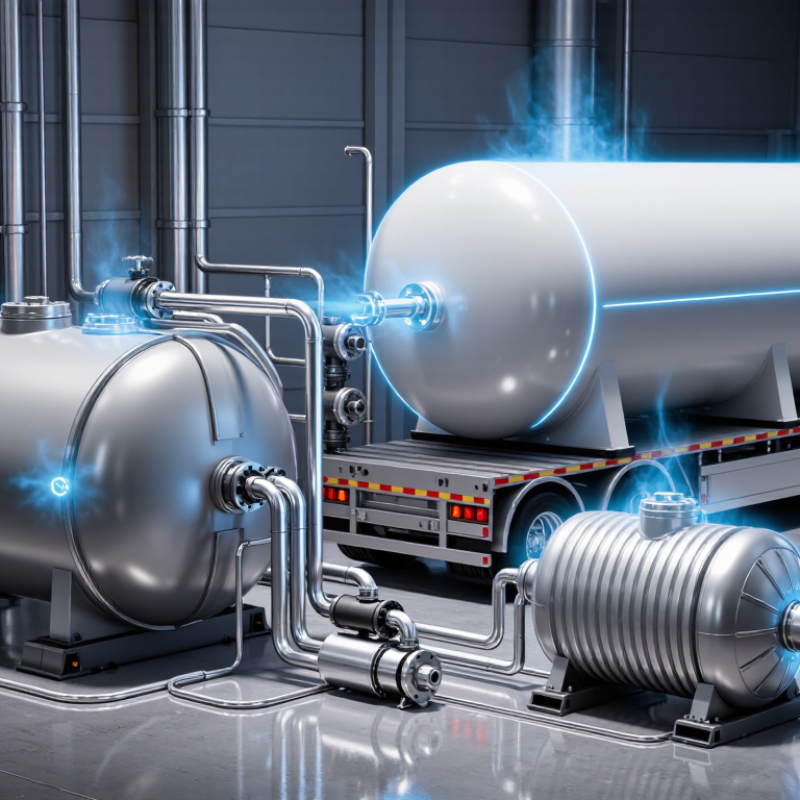
The right tank depends on where hydrogen is stored and how often it moves. For a fixed fueling site, a large, double-wall vessel with vacuum insulation can hold liquid hydrogen efficiently. Its outer shell protects the insulated space, while careful piping design helps limit heat leaks. It needs a stable foundation and room for safe venting. Not every site has that room.

Transport changes the trade-offs. A road tanker must balance insulation, payload, axle limits, and repeated loading cycles. Marine storage faces different demands: sloshing, long voyages, and access for inspection. Tank shape and support structure matter as much as insulation. A design optimized for a stationary depot may be awkward on a moving vehicle.

Smaller users may favor modular tanks that fit available space and simplify installation. But more connections can mean more potential leak points and maintenance tasks. Operators should compare measured boil-off rates under real operating conditions, not just ideal specifications. Ask how the system handles cooldown, pressure control, and changing fill levels. These details are easy to overlook.

No option wins everywhere; site layout, duty cycle, and service capability can shift the answer. A neat spreadsheet may still miss the cost of difficult access or frequent venting.

How to Choose a Tank for a Specific Use Case

What Is the Best Cryogenic Hydrogen Storage Tank in 2026?

How to Choose a Tank for a Specific Use Case

The best tank depends on how hydrogen will be used, delivered, and replenished. Start with the operating pattern: a vehicle tank faces weight and vibration limits, while a depot tank may prioritize storage duration and delivery access.

The U.S. Department of Energy’s onboard storage targets set 5.5 weight percent and 40 grams per liter for 2025 systems. These are vehicle-system targets, not universal specifications for stationary cryogenic tanks. Useful reference points, not a shopping answer.

For a site using liquid hydrogen, estimate daily draw, peak demand, and expected idle time. The International Energy Agency’s Future of Hydrogen report puts liquefaction energy use at about 10–13 kilowatt-hours per kilogram. That energy cost can make a liquid system harder to justify when throughput is low.

Check insulation performance, allowable pressure, boil-off handling, and safe access for maintenance. A tank that fits on paper may not fit beside the loading bay.

For mobile use, compare payload, usable capacity, fill frequency, and route length. For stationary use, assess foundation loads, transfer-line length, weather exposure, and backup supply.

Ask suppliers for tested heat-leak and hold-time data under conditions close to your own. Calculations can look reassuring. Real sites are messier.

I would also revisit assumptions after commissioning; demand forecasts often miss uneven shifts and seasonal peaks.