Blog

How to Choose the Right Cryostorage Tank?

Choosing the right cryostorage tank is a practical decision with long-term consequences. A suitable tank protects valuable biological materials, supports daily workflows, and reduces avoidable handling risks. Yet capacity alone rarely tells the full story.

In a busy laboratory, staff may open the lid dozens of times each week. Each opening can affect temperature stability and liquid nitrogen consumption. A tank with a 500-liter capacity may still disappoint if its usable rack space is poorly designed. Check the actual vial count, canister layout, neck diameter, and access height before comparing prices. Small details matter.

Temperature performance deserves careful attention. Vapor-phase storage may suit samples requiring reduced contact with liquid nitrogen. Liquid-phase storage can offer different preservation conditions, but it demands disciplined monitoring. Review the manufacturer’s test data, alarm functions, vacuum performance, and expected hold time. Ask how the equipment behaves during power failures or delayed refilling. Real experience matters here. A technical brochure cannot describe every crowded storage room.

Consider maintenance, staff training, delivery access, and future expansion. Confirm that local technicians can support the model and replace critical components. Keep documented inspection and refill procedures. Reliable records often reveal problems before a sample is lost.

No cryostorage tank is perfect. A larger unit may waste space and nitrogen, while a compact model may become restrictive sooner than expected. Revisit your assumptions. Speak with operators who use similar systems daily, not only sales representatives. The best choice balances sample safety, operational habits, verified performance, and realistic budget limits.
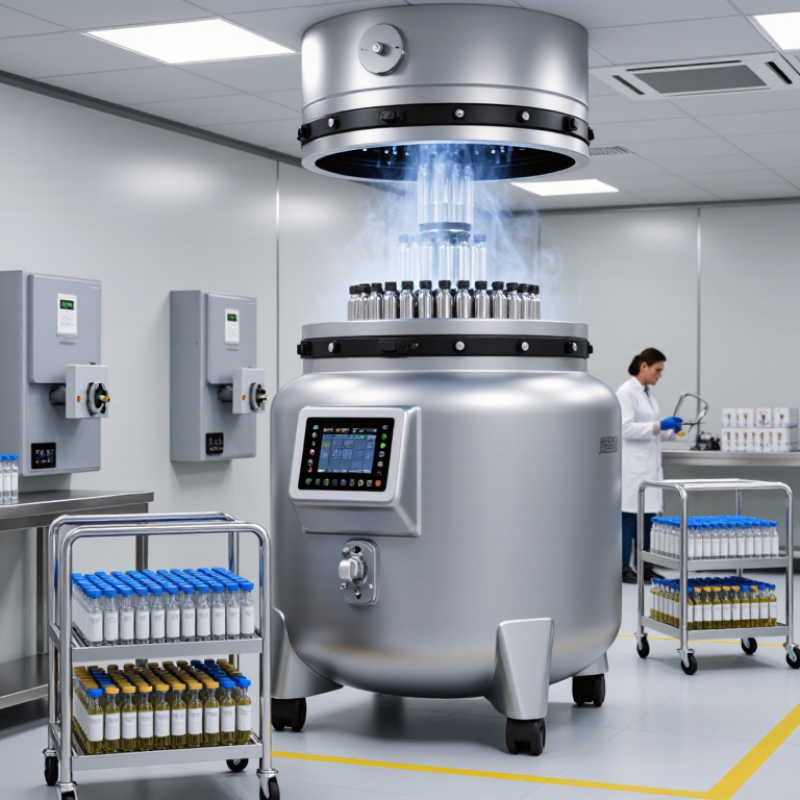
How to Choose the Right Cryostorage Tank?

Cryostorage Tank Basics and Main Storage Applications

How to Choose the Right Cryostorage Tank?

A cryostorage tank preserves biological materials at extremely low temperatures. Most systems use liquid nitrogen or its vapor phase. The correct choice depends on sample type, capacity, access frequency, and storage duration. Cells, tissues, reproductive materials, and research specimens may require different temperature controls. A tank should maintain stable conditions, even during routine lid opening. Small temperature changes can damage sensitive samples. Interior racks must fit cryovials securely and support clear labeling. Capacity also matters. A crowded tank slows retrieval and increases handling risks.

Cryostorage tanks support hospitals, laboratories, biobanks, fertility centers, and research facilities. They may hold cell lines, stem cells, tissue samples, blood products, or quality-control materials. Vapor storage can reduce direct contact with liquid nitrogen. Liquid-phase storage may suit materials requiring deeper, consistent cooling. However, neither option is automatically better. Sample requirements must guide the decision. Check insulation performance, alarm functions, nitrogen consumption, and backup arrangements. A tank is not a set-and-forget device. Regular inspections remain necessary, even when everything appears normal.

Tips: Measure your real storage demand, not only today’s inventory. Leave space for future samples. Confirm the tank’s operating procedure before purchase. Staff should use suitable protective equipment and work in well-ventilated areas. Keep digital and physical inventory records. Test alarms regularly. I have found that retrieval time is often underestimated. A slightly larger tank may improve daily workflow, but excessive capacity can waste resources. Reviewing the choice after several months is sensible.
Assessing Capacity, Temperature, and Sample Requirements

Choosing the right cryostorage tank starts with the samples, not the tank’s advertised volume. Count current vials, planned additions, and a realistic reserve. A crowded rack slows retrieval and increases handling errors. Leave usable space. In practice, a 20 percent buffer often supports routine growth, but each laboratory should test its own storage pattern. Sample dimensions matter too. Cryoboxes, canisters, and racks must fit without forcing lids or blocking access.

Temperature requirements depend on sample type and its accepted stability range. Ask whether samples need vapor-phase storage, liquid-phase storage, or another validated condition. The displayed temperature is not enough. Review mapped temperatures, probe locations, alarm response, and recovery time after lid opening. A tank may read safely while a warm zone develops near the neck. That detail is easy to miss. Use independent monitoring where possible, and record alarm checks rather than assuming they work.

Capacity and temperature mean little if the tank cannot support daily workflow. Check how often staff retrieve samples, how long the lid stays open, and whether gloves allow precise handling. Match the neck opening and rack layout to those movements. Confirm refill access, ventilation, oxygen monitoring, and staff training against institutional requirements. I would also run a mock retrieval before purchase. It can reveal awkward labels or poor visibility. Specifications look convincing; real handling can disagree. Reassess the plan after a month of use, because the original assumptions may be wrong.

Comparing Tank Designs, Insulation, and Performance

How to Choose the Right Cryostorage Tank?

Comparing tank designs, insulation, and performance starts with the storage task. Liquid nitrogen boils at approximately −196°C at atmospheric pressure, according to NIST Chemistry WebBook data. That extreme temperature demands stable insulation and controlled venting.

A wide-neck tank offers faster access and easier rack handling. However, it usually has higher evaporation than a narrow-neck design. Narrow-neck models reduce heat entry but can slow daily retrieval. That trade-off is easy to overlook.

Vacuum-jacketed walls and multilayer insulation improve thermal efficiency. Perlite insulation can also perform well in larger vessels. Compare static evaporation rates, not advertised capacity alone.

ISO 21009-2 emphasizes performance testing for cryogenic vessels, including heat leakage and holding time. These figures help estimate nitrogen consumption under controlled conditions. Real laboratories may see different results. Frequent lid opening, warm racks, and poor room ventilation increase losses.

ISBER Best Practices recommends continuous temperature monitoring, alarms, documented maintenance, and validated inventory procedures. A tank should support those controls without awkward modifications.

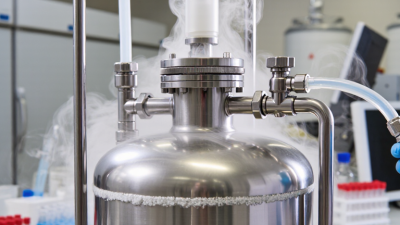
Check the usable volume beneath the neck. Inspect the lid seal and neck for frost patterns. Excessive frost may signal insulation or vacuum problems.

It is tempting to select the largest tank available, but larger vessels can create heavier handling risks and longer recovery times. Smaller units may be safer for active work areas, although they require more frequent refilling.

Performance data matters more than appearance.

Checking Safety Features, Monitoring, and Regulatory Standards

How to Choose the Right Cryostorage Tank?

Safety features should guide every cryostorage tank decision, not just storage capacity. Look for vacuum insulation, stable racks, pressure-relief devices, and secure lids. The tank should reduce oxygen exposure during filling and routine access. A well-designed venting path is essential in enclosed rooms. Never rely on a single warning signal.

In a busy laboratory, monitoring failures can happen quietly. Good visibility matters. Use independent sensors to track temperature, liquid level, and room oxygen concentration. Set alarms for abnormal levels, rising temperature, and sensor faults. Test each alarm under controlled conditions. Data logs should record readings, alerts, and staff responses. Manual checks remain essential. They catch problems that software may miss.

Regulatory compliance depends on location and application. Confirm local occupational safety, pressure-vessel, and fire requirements before purchase. Relevant quality frameworks may include ISO 20387 for biobanking or ISO 15189 for medical laboratories, where applicable. Ask for documented maintenance procedures and calibration records. Keep inspection dates, training logs, and incident reports together. Review emergency plans with staff near the tank, not only in a binder. A failed sensor can create false confidence. No checklist is perfect. I would still question any system that cannot show who responded, when, and what they observed.

Estimating Maintenance Needs, Operating Costs, and Total Value

How to Choose the Right Cryostorage Tank?

A cryostorage tank should be judged by lifetime value, not purchase price alone. ISBER Best Practices, 4th edition, recommends continuous monitoring, documented alarm testing, and preventive maintenance for biological repositories. These controls reduce avoidable sample loss, but they require staff time and reliable backup systems.

Liquid nitrogen consumption is a major operating cost. Technical guidance from the Compressed Gas Association notes that evaporation depends on tank design, opening frequency, room temperature, and vacuum performance. A busy laboratory may use far more nitrogen than a quiet archive. Request measured evaporation data, not only catalogue estimates. Electricity also matters for mechanical systems. The International Energy Agency reports that cooling can represent more than 10% of commercial building electricity use in many regions, although laboratory conditions may differ.

Maintenance costs are easy to underestimate. Budget for sensor calibration, lid and seal inspections, alarm replacement, nitrogen delivery, and emergency transfers. ISBER also emphasizes traceability and contingency planning. That means extra racks, validated backup capacity, and trained personnel. A smaller tank may seem efficient, yet frequent refilling can increase labor and exposure risk.

The numbers need testing.

Compare five-year cost per stored sample, including floor space and downtime. One uncomfortable question remains: are your usage forecasts realistic, or merely optimistic?