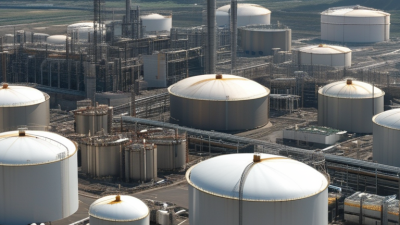
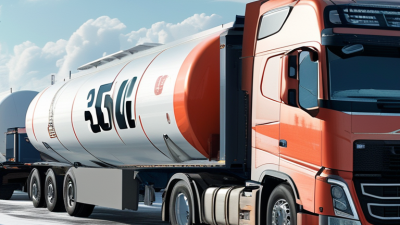
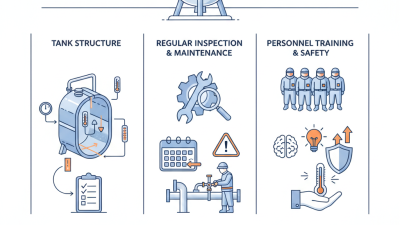
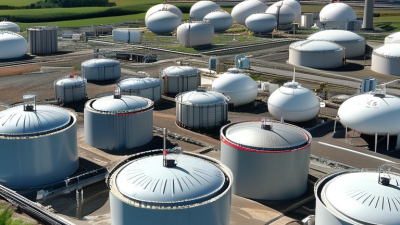
Cryogenic bulk storage tanks are engineered vessels designed to hold liquefied gases at extremely low temperatures. Common products include liquid nitrogen, oxygen, argon, and carbon dioxide. These tanks support hospitals, laboratories, food processors, and industrial plants where gas demand exceeds cylinder delivery capacity. Their scale can range from compact site units to large installations serving continuous production.
Most cryogenic bulk storage tanks use a double-wall construction. The inner vessel contains the liquefied gas, while the outer shell protects the insulation system. A vacuum space helps reduce heat transfer and limits product loss through evaporation. However, insulation does not stop heat completely. Some boil-off is expected. Pressure gauges, level indicators, relief devices, valves, and transfer connections help operators monitor and control the system. Look for the frost line.
In practical operation, personnel may hear a brief hiss during pressure management or see vapor near a transfer hose. These signs require trained interpretation, not guesswork. Safe performance depends on product compatibility, tank sizing, ventilation, foundation design, and maintenance records. Applicable pressure-vessel standards and local requirements should guide every installation, with qualified specialists reviewing the final design. No tank fits every facility. A unit sized for steady nitrogen demand may perform poorly during sudden peak use. That assumption deserves review. Reliable owners also inspect relief systems, verify instruments, and document abnormal pressure changes. The technology is mature, but daily discipline remains essential. A careful introduction to cryogenic bulk storage tanks should therefore explain both their efficiency and their limitations.
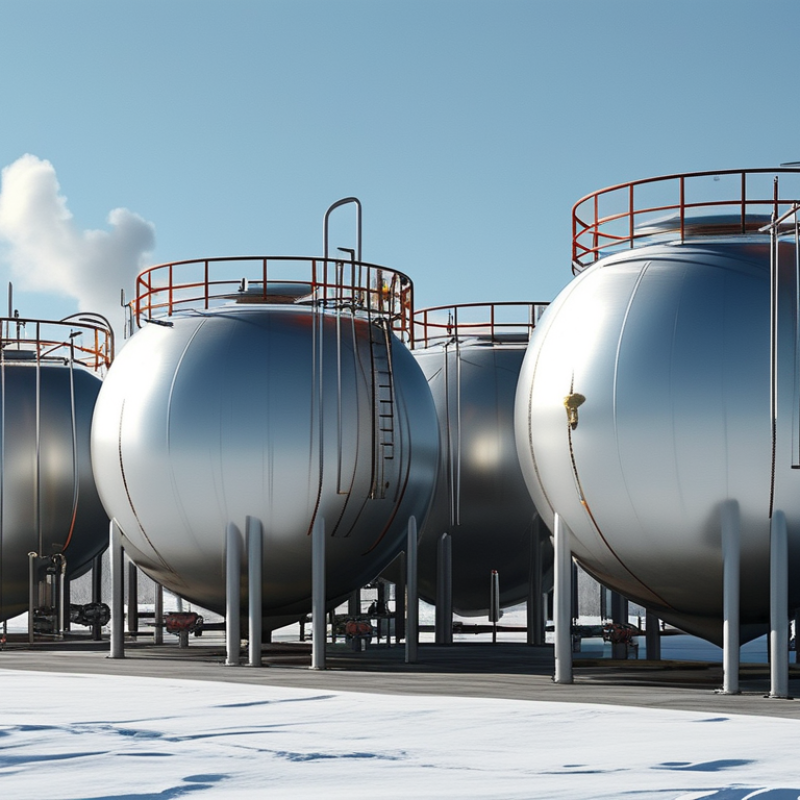
Cryogenic bulk storage tanks are engineered vessels for holding liquefied gases at extremely low temperatures. Their purpose is straightforward: store large volumes safely and supply them steadily. “Cryogenic” usually refers to temperatures below -150°C. Liquid oxygen boils near -183°C, while liquid nitrogen boils near -196°C. Double-wall steel construction and vacuum insulation limit heat transfer. Pressure-building circuits replace vaporized liquid and maintain delivery pressure. Relief devices manage pressure increases. Cold changes everything.
Hospitals use these tanks for medical oxygen. Metal fabricators depend on nitrogen and argon for cutting and welding. Food processors use liquid nitrogen for rapid freezing. The U.S. Energy Information Administration reported that American LNG exports averaged 11.9 billion cubic feet per day in 2023. That figure does not measure tank capacity, but it shows the scale of cryogenic gas logistics. The IEA’s Global Hydrogen Review 2024 estimated global hydrogen demand at almost 100 million tonnes in 2023, increasing interest in specialized storage systems.
Tank sizing depends on daily consumption, delivery frequency, climate, and required reserve time. A 100,000-liter vessel may serve a steady industrial process, while a smaller tank suits a clinic. Operators inspect vacuum performance, valves, foundations, and pressure records. A design can meet specifications and still perform poorly. Poor turnover may increase evaporation losses. In practice, maintenance discipline matters as much as steel thickness.
| Data Dimension | Description | Typical or Relevant Data | Purpose or Importance |
|---|---|---|---|
| Definition | A cryogenic bulk storage tank is an insulated vessel designed to store liquefied gases at very low temperatures. | Commonly used for liquid oxygen, liquid nitrogen, liquid argon, liquid carbon dioxide, and liquefied natural gas. | Keeps gases in liquid form so they can be stored and supplied in large quantities. |
| Primary Storage Method | The product is stored as a refrigerated liquid under controlled pressure. | The liquid remains below its atmospheric boiling point or at a controlled saturation condition. | Liquid storage requires substantially less volume than storing the same gas in gaseous form. |
| Typical Operating Temperature | Operating temperature depends on the cryogenic fluid and tank pressure. | Liquid nitrogen: approximately −196°C; liquid oxygen: approximately −183°C; liquid argon: approximately −186°C; liquid carbon dioxide: approximately −78.5°C. | Low temperatures maintain the stored product as a liquid and reduce unnecessary vapor generation. |
| Tank Construction | Most bulk tanks use a double-wall design with an inner vessel and an outer protective shell. | The inner vessel is commonly stainless steel or another cryogenic-compatible material; the outer shell is often carbon steel or stainless steel. | The design provides structural protection and separates the cold product from the surrounding environment. |
| Insulation System | The space between the inner and outer vessels is insulated to limit heat transfer. | Vacuum insulation and multilayer insulation are widely used; other systems may use perlite or similar insulating materials. | Reduces heat leak, limits boil-off, and improves storage efficiency. |
| Capacity Range | Capacity varies according to the application, delivery schedule, and available installation space. | Bulk tanks may range from several hundred litres to hundreds of thousands of litres; many fixed installations are sized in the thousands or tens of thousands of litres. | Allows users to match storage volume with consumption and refill intervals. |
| Pressure Control | Pressure is managed through controlled vaporization, pressure-building circuits, and relief devices. | Design and working pressures are selected according to the fluid, applicable code, and operating requirements; many systems operate at low-to-moderate gauge pressure. | Maintains usable delivery pressure while protecting the vessel from overpressure. |
| Key Components | A bulk storage system includes the tank and equipment needed for filling, withdrawal, monitoring, and safety. | Typical components include fill lines, liquid and vapor outlets, level gauges, pressure gauges, vaporizers, isolation valves, and pressure-relief devices. | Supports controlled transfer, accurate inventory management, and safe operation. |
| Main Purpose | Provides a reliable on-site reserve of cryogenic liquid. | Enables continuous or scheduled gas supply without relying exclusively on individual high-pressure cylinders. | Improves supply continuity, reduces cylinder handling, and can support higher consumption rates. |
| Gas Delivery | Stored liquid is vaporized when gaseous product is required. | Ambient or heated vaporizers convert the liquid into gas before delivery to the process or distribution system. | Provides a stable gas flow for industrial, medical, laboratory, food, and energy applications. |
| Typical Applications | Used wherever large quantities of cryogenic fluids are needed on a regular basis. | Hospitals, metal fabrication, chemical processing, electronics manufacturing, food freezing, laboratories, wastewater treatment, and energy facilities. | Provides a practical supply solution for processes requiring consistent cryogenic gas or liquid. |
| Boil-Off Gas | A small amount of stored liquid may vaporize because of unavoidable heat entering the tank. | The quantity depends on insulation performance, ambient conditions, tank size, filling level, and product withdrawal. | Proper pressure management and vapor handling help control product loss and maintain safe pressure. |
| Safety Requirements | Cryogenic tanks require safeguards against extreme cold, pressure hazards, oxygen enrichment, and material embrittlement. | Safety measures include pressure relief, appropriate ventilation, safe separation distances, protective equipment, signage, and routine inspection. | Reduces risks to personnel, equipment, and surrounding facilities. |
| Applicable Standards | Design, fabrication, installation, and inspection are governed by applicable pressure-vessel and cryogenic-service requirements. | Requirements may include local regulations and recognized codes such as ASME pressure-vessel rules, EN standards, or transport and storage regulations. | Ensures the tank is suitable for its intended fluid, pressure, temperature, and operating environment. |
Note: Actual capacity, pressure, temperature, materials, insulation, and safety requirements must be selected according to the stored fluid, site conditions, applicable regulations, and engineering specifications.