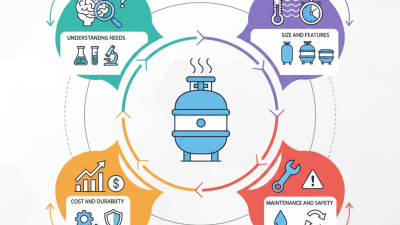
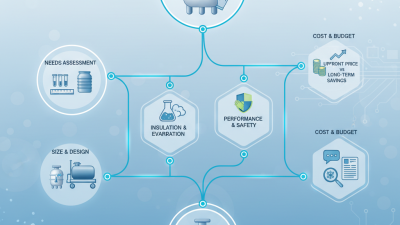
Choosing a liquid nitrogen cryogenic tank is not simply a matter of selecting the largest vessel available. Capacity, pressure rating, insulation quality, and daily nitrogen demand must work together. A laboratory storing biological samples may need a compact vacuum-insulated tank, while a manufacturing site may require a larger unit with controlled filling and reliable vapor management.
Klaus D. Timmerhaus, a respected cryogenic engineering authority, emphasized, “The safe storage of cryogenic liquids depends on controlling temperature, pressure, and material behavior.” That principle remains practical. A good liquid nitrogen cryogenic tank should maintain stable performance when room temperatures change, deliveries are delayed, or usage suddenly increases. Look closely at the tank’s vacuum jacket, relief devices, level gauge, venting arrangement, and transfer connections. Small details matter. A weak gauge can create uncertainty during a busy filling cycle.
Real operating experience also deserves attention. Measure actual consumption for several weeks before choosing capacity. Do not rely only on a supplier’s estimated figures. A tank that looks economical may cause frequent refills, while an oversized model can increase capital and installation costs. I have seen specifications appear complete, yet omit access clearance and ventilation planning. That gap is easy to miss. Reliable suppliers should provide inspection records, maintenance guidance, operator training, and documentation for applicable regional standards. The final choice should balance performance, safety, service support, and future demand—not just the lowest purchase price.
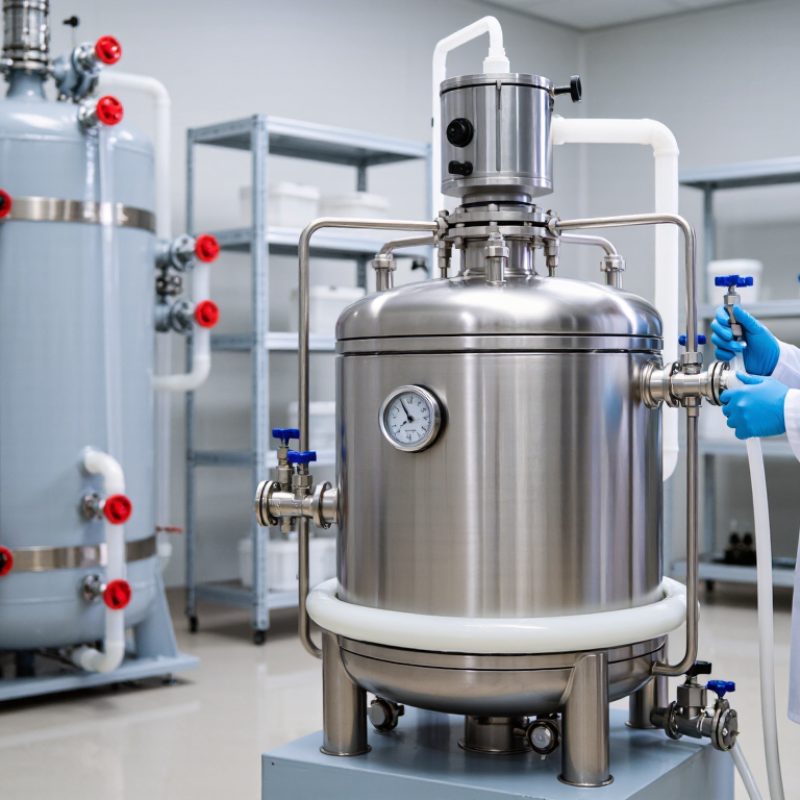
How to Choose a Liquid Nitrogen Cryogenic Tank
Liquid nitrogen tanks serve different purposes. Some support laboratory storage, while others supply frequent liquid withdrawal. A laboratory storage tank may prioritize low evaporation and stable temperature. A transport vessel needs stronger construction, secure closures, and manageable weight. Purpose determines design.
Before choosing a tank, identify the required storage volume, withdrawal rate, and filling frequency. Daily access can increase heat input and nitrogen loss. For long-term storage, vacuum insulation and a reliable neck design become especially important. Operating conditions matter equally. Measure the room temperature, ventilation, available floor space, and expected transport conditions. Cryogenic liquid expands rapidly as it warms.
Keep the tank away from heat sources and protect it from impact. The room needs adequate ventilation and suitable oxygen monitoring where required by a risk assessment. Never block pressure relief devices. They protect the vessel from dangerous pressure buildup. Field inspections often reveal a simple mistake: choosing capacity by volume alone. A larger tank may reduce refilling, yet it can waste nitrogen when demand stays low. That trade-off matters. Review technical data, maintenance needs, and inspection records with a qualified professional. Ask how performance changes under real operating conditions, not only ideal ones. If records are incomplete, selection becomes guesswork.
| Selection Dimension | What to Assess | Typical or Relevant Data | Why It Matters | Recommended Selection Approach |
|---|---|---|---|---|
| Intended Purpose | Determine whether the tank is used for storage, transport, laboratory dispensing, or process supply. | Storage vessels are commonly stationary; transport vessels require impact-resistant construction, secure closures, and suitable handling features. | Tank design, insulation, fittings, and certification requirements vary with the intended use. | Define the primary application before comparing capacity, pressure, and accessories. |
| Liquid Nitrogen Temperature | Confirm that all wetted materials, seals, valves, and instruments are suitable for cryogenic service. | Liquid nitrogen boils at approximately −196 °C at standard atmospheric pressure. | Materials that are suitable at room temperature may become brittle or lose sealing performance at cryogenic temperatures. | Use materials and components specifically rated for liquid nitrogen and the expected temperature range. |
| Required Capacity | Estimate the usable inventory required between refills. | Common laboratory vessel capacities range from a few litres to several hundred litres; larger installations may use bulk storage systems. | Oversizing increases purchase cost, footprint, and standing losses, while undersizing can cause frequent refilling. | Calculate daily or weekly consumption, refill frequency, reserve volume, and the required working capacity. |
| Working Capacity | Distinguish usable volume from total geometric volume. | Working capacity is normally lower than the nominal vessel capacity because a safe operating margin is required. | Filling completely can interfere with pressure control, venting, and safe handling. | Follow the tank manufacturer’s marked maximum fill level and operating instructions. |
| Static Evaporation Rate | Evaluate nitrogen loss when the tank is closed, filled, and not actively dispensing. | Evaporation rate depends on vessel size, insulation, vacuum quality, ambient temperature, lid or neck design, and liquid level. | Lower evaporation generally reduces product loss and extends the interval between refills. | Compare the stated static evaporation rate under the same test conditions; do not compare figures without checking the test method. |
| Operating Pressure | Identify whether the tank is atmospheric, low-pressure, or designed to supply pressurized nitrogen gas or liquid. | Atmospheric storage tanks operate near ambient pressure; pressurized systems must have a defined working pressure and relief arrangement. | Pressure affects vessel construction, delivery performance, safety controls, and compatible downstream equipment. | Select a pressure rating that meets the process requirement without exceeding the lowest-rated connected component. |
| Pressure Relief and Venting | Check relief devices, vent paths, vacuum protection, and the possibility of blocked outlets. | Liquid nitrogen continuously absorbs heat and can generate gas; a sealed container can develop dangerous pressure. | Safe venting prevents pressure accumulation and protects the vessel from rupture. | Never use an unapproved airtight closure. Keep relief paths unobstructed and inspect them according to the operating procedure. |
| Insulation and Vacuum Integrity | Review the insulation system and indicators of vacuum degradation. | High-performance cryogenic tanks commonly use vacuum insulation combined with reflective or low-conductivity insulation materials. | Loss of vacuum increases heat leak, boil-off, surface frosting, and operating cost. | Choose a vessel with documented insulation performance and a method for identifying abnormal evaporation or vacuum loss. |
| Material Compatibility | Assess the inner vessel, outer jacket, transfer lines, valves, gaskets, and sample racks. | Common cryogenic construction materials include stainless steels and other materials qualified for low-temperature service. | Improper materials may crack, deform, leak, or contaminate the stored contents. | Verify low-temperature ratings, chemical compatibility, cleanliness requirements, and mechanical strength. |
| Withdrawal Method | Determine whether liquid nitrogen will be poured, dispensed through a siphon, transferred by pressure, or supplied through a piping system. | Small open vessels may support manual dispensing; larger systems may use transfer lines, valves, and regulated pressure. | The withdrawal method influences tank geometry, fittings, flow control, operator exposure, and installation requirements. | Select compatible outlets and accessories based on the required flow rate and transfer distance. |
| Transfer Rate | Define the required liquid or gas delivery rate and the acceptable filling time. | Actual flow depends on pressure difference, line diameter, transfer-line insulation, elevation, valve design, and liquid level. | An inadequate transfer rate can interrupt processes, while excessive flow can increase splashing and handling hazards. | Size the tank, outlet, regulator, and transfer line as one complete system. |
| Application Environment | Review indoor or outdoor placement, ambient temperature, ventilation, moisture, dust, and available floor space. | Liquid nitrogen releases nitrogen gas as it evaporates; enclosed areas require an appropriate ventilation and oxygen-monitoring assessment. | Oxygen displacement can create an asphyxiation hazard even when nitrogen itself is not toxic. | Install the tank in a stable, well-ventilated location with suitable access and emergency controls. |
| Mobility and Handling | Consider vessel weight when full, wheels, lifting points, frame design, and route conditions. | Liquid nitrogen has a density of approximately 0.81 kg/L near its boiling point; the vessel’s tare weight must also be included. | A full tank can be substantially heavier than an empty tank and may be difficult to move safely. | Use rated carts, restraints, lifting equipment, and clear handling procedures; do not move a pressurized vessel by its valves or piping. |
| Storage of Biological Samples | Assess neck opening, rack compatibility, sample access, temperature uniformity, and retrieval frequency. | Wide-neck vessels provide easier access; narrow-neck vessels generally reduce heat ingress and evaporation. | Frequent access may increase boil-off and expose samples to temperature fluctuations. | Balance accessibility against holding time, sample density, rack layout, and required preservation conditions. |
| Standards and Documentation | Request the pressure rating, operating instructions, inspection records, material information, and applicable conformity documentation. | Requirements vary by country, vessel type, transport status, installation location, and operating pressure. | Documentation supports safe operation, maintenance, training, and regulatory compliance. | Confirm applicable local regulations and have the complete system reviewed by a qualified safety or engineering professional. |
| Maintenance and Inspection | Plan routine checks for frost patterns, abnormal boil-off, damaged insulation, blocked vents, leaks, valves, hoses, and restraints. | Inspection intervals should be based on the tank design, service conditions, usage frequency, and applicable regulations. | Early detection of vacuum loss, component damage, or vent blockage reduces operational and safety risks. | Maintain written inspection, refill, cleaning, repair, and incident-response procedures. |
| Personal Protective Equipment | Provide protection for cryogenic liquid splash and cold-contact exposure during filling and dispensing. | Typical controls include face protection, safety glasses, cryogenic gloves, protective clothing, and fully covered footwear. | Liquid nitrogen can cause severe cold burns and may embrittle materials on contact. | Use PPE appropriate to the task and never rely on gloves or clothing as a substitute for safe transfer procedures. |