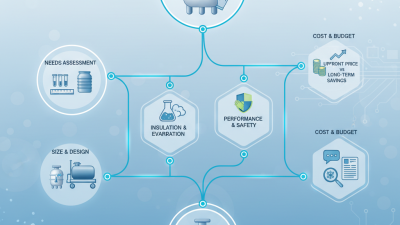
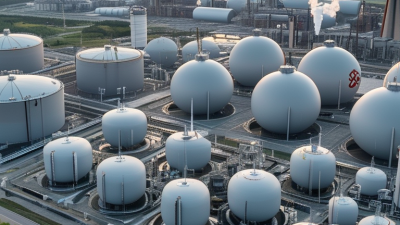
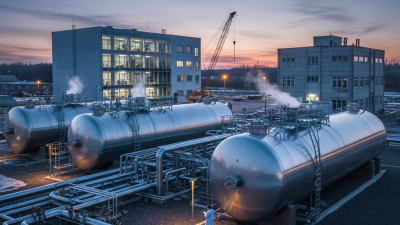
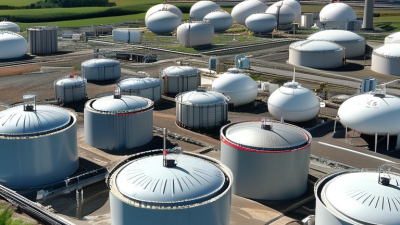
Choosing liquid nitrogen tanks for cell storage is a technical decision with lasting consequences. The right vessel protects valuable samples, supports stable workflows, and reduces avoidable handling risks. A tank may look suitable on paper, yet perform poorly in a busy laboratory.
Capacity matters, but it is not the only concern. Teams should examine usable storage volume, rack compatibility, static holding time, evaporation rate, and access design. Small details matter. A narrow neck can reduce vapor loss, but it may slow sample retrieval. A wide opening improves access, although it can increase exposure during frequent use. These trade-offs deserve careful review.
Reliable liquid nitrogen tanks for cell storage should also match the laboratory’s monitoring and maintenance practices. Check temperature alerts, liquid-level gauges, pressure relief features, and backup procedures before purchase. Manufacturers with documented testing, clear specifications, and responsive technical support offer stronger confidence. Independent verification remains valuable.
Real-world experience often changes the initial choice. A tank selected for maximum capacity may become difficult to move or organize. A cheaper model may require more frequent filling, increasing labor and disruption. Some assumptions will be wrong. That is normal, but they should be tested early.
The safest selection process combines sample volume, storage duration, room layout, staff habits, and future growth. It also considers training, ventilation, personal protective equipment, and routine inspection. No single tank fits every laboratory. Careful comparison creates a storage system that is practical, traceable, and dependable over time.
Choosing a liquid nitrogen tank starts with the cells, not the tank catalogue. Define the required temperature first. ISBER Best Practices recommends maintaining cryogenic specimens below −150°C, while liquid nitrogen operates near −196°C at atmospheric pressure. For long-term storage, vapor-phase systems may reduce direct liquid contact and contamination concerns, but they require validated temperature mapping.
Count every cryovial, cassette, and future batch. A practical capacity model is: current inventory + projected growth + reserve space. Many laboratory planners allow 15–25% spare capacity, although this range should be verified against local procedures and retrieval frequency. A 1,000-vial inventory does not automatically require a 1,000-vial tank. Rack geometry, vial format, drawer clearance, and usable volume can change the calculation sharply.
Check the numbers twice. Small errors become expensive.
The National Institute of Standards and Technology identifies nitrogen’s boiling point as approximately −195.8°C, but actual storage temperatures depend on tank design, fill level, and monitoring. Review the manufacturer’s working capacity rather than its advertised maximum. Record daily evaporation, alarm response time, refill intervals, and backup access. A spreadsheet may look precise and still miss weekend retrievals or emergency transfers. That is where the plan becomes fragile. Choose a tank that supports documented workflows, validated temperature control, staff handling experience, and realistic expansion over several years.
| Storage Scenario | Typical Container | Units per Container | Estimated Samples per Unit | Estimated Samples per Container | Recommended Tank Configuration | Key Selection Considerations |
|---|---|---|---|---|---|---|
| Small research collection | Cryovial | 25–50 | 1 | 25–50 | Compact vapor-phase or liquid-phase tank with a nominal capacity of approximately 10–30 L | Prioritize easy access, low footprint, secure sample identification, and sufficient static hold time. |
| Routine laboratory storage | Cryobox | 6–12 | 25–100 | 150–1,200 | Medium-capacity tank, commonly about 30–100 L, with organized canisters or racks | Allow space for future samples, account for rack geometry, and choose a tank with a practical refill interval. |
| Large biobank collection | Cryobox or rack | 12–40 | 81–100 | 972–4,000 | Large-capacity tank or multiple coordinated tanks, often above 100 L total nominal capacity | Use redundant storage, independent temperature monitoring, controlled access, and a documented emergency-transfer plan. |
| High-value cell lines or clinical material | Sealed cryovial in vapor phase | Varies by rack design | 1 | Defined by validated rack layout | Validated vapor-phase system with suitable monitoring, alarm functions, and backup capacity | Confirm temperature uniformity, minimize cross-contamination risk, and follow applicable quality and biosafety procedures. |
| Planning Metric | How to Determine It | Practical Planning Guidance |
|---|---|---|
| Required sample capacity | Number of containers × units per container × samples per unit | Use the actual usable rack positions rather than the tank's gross internal volume. |
| Growth allowance | Required sample capacity × planned expansion factor | A 20–30% capacity reserve is commonly used for expanding collections, replacement boxes, and layout changes. |
| Working nitrogen volume | Tank nominal capacity minus the minimum safe operating level | Do not plan to operate at empty or at the maximum fill level; follow the tank manufacturer's operating limits. |
| Refill interval | Static hold time under expected access and environmental conditions | Select a refill schedule that remains manageable during weekends, holidays, transport delays, and emergency events. |
| Redundancy requirement | Risk assessment based on sample value, recovery time, and backup resources | Critical collections should have backup storage, alarms, contingency procedures, and access to an alternative nitrogen supply. |

Choosing a liquid nitrogen tank for cell storage starts with the storage configuration, not the advertised capacity. Vapor-phase tanks keep samples above the liquid surface, reducing direct contact and possible cross-contamination. Liquid-phase tanks offer colder, more uniform conditions, but their racks and vials require stricter sealing. The ISBER Best Practices, 5th edition (2021), recommends matching temperature control, monitoring, access, and maintenance procedures to the repository’s risk profile.
A practical detail matters: one litre of liquid nitrogen produces about 694 litres of gas at room temperature, according to NIST reference data. Ventilation is therefore essential.
Tank types also differ in working capacity, static hold time, neck opening, and retrieval speed. Small dewars suit short-term transfer or low-volume work. Larger storage tanks support thousands of vials, but they may increase refill complexity and sample exposure during retrieval. Narrow-neck designs usually reduce evaporation, while wider openings improve access. That trade-off is easy to underestimate.
WHO’s Laboratory Biosafety Manual, 4th edition (2020), emphasizes controlled procedures, training, and monitoring for cryogenic environments. In practice, choose vapor-phase storage for contamination-sensitive collections and liquid-phase storage when maximum thermal stability is justified. Add continuous temperature alarms, backup power planning, and documented fill checks.
A bigger tank is not automatically safer. Capacity alone is an incomplete decision.
Temperature control should match the cells, storage duration, and loading frequency. Liquid-phase storage offers extremely low temperatures, while vapor-phase storage can reduce direct contact with liquid nitrogen. However, vapor temperatures may vary between rack positions. Ask for mapped temperature data, not only the lowest advertised figure. A reliable tank should include calibrated sensors, independent alarms, and records that show stable performance during normal use. It should also recover temperature quickly after the lid opens.
Safety begins with the room, not the tank alone. Confirm adequate ventilation and install oxygen monitoring where nitrogen could displace breathable air. Pressure-relief devices must remain unobstructed. Staff need training in face shields, insulated gloves, closed footwear, and careful transfer procedures. The tank should be easy to move only when properly designed for transport. Small details matter. A heavy lid can cause awkward handling and accidental exposure.
Sample protection depends on organization and access control. Choose racks that support clear labeling, barcode tracking, and fast retrieval. Keep sensitive samples away from the warmest upper areas, if mapping shows uneven temperatures. Use sealed, nitrogen-compatible containers and inspect them for cracks, leakage, or damaged caps. Cross-contamination is often overlooked, especially when containers contact liquid directly. No tank is perfect. Real use may reveal frost, crowded racks, or alarm delays. Review these weaknesses during routine inspections, then adjust loading plans and emergency procedures before a sample is lost.
How to Choose Liquid Nitrogen Tanks for Cell Storage?
Tank material affects both service life and storage stability. Aluminum tanks are lightweight and easy to move, while stainless steel offers stronger resistance to dents and repeated handling. The inner vessel should have a reliable vacuum jacket and a well-fitted neck opening. Narrow necks can reduce evaporation, but they may slow access during busy sample retrieval. Check the vessel’s technical data, not only its advertised capacity.
Durability depends on daily treatment. A tank may look clean yet suffer vacuum loss after one hard impact. Place it on a stable, level surface away from doors, heat sources, and heavy traffic. Inspect the lid, neck tube, casters, and protective collar regularly. Small frost patches can be an early warning. In laboratory practice, staff sometimes overlook these changes because the samples remain cold. That assumption needs review.
Maintenance should follow a written schedule and the manufacturer’s service guidance. Record liquid levels, refill dates, temperature readings, and unusual frost patterns. Keep the lid closed, but never force it when ice forms around the neck. Use trained personnel, suitable gloves, face protection, and adequate ventilation during handling. A clear inventory also reduces unnecessary lid opening. Some teams check tanks monthly, but high-use units may need weekly inspections. The schedule should reflect actual workload, not convenience.
Material screening based on cryogenic suitability, durability, corrosion resistance, and routine maintenance needs
Lightweight and commonly used for cryogenic vessels. It offers good low-temperature toughness, but the surface can be more vulnerable to dents and abrasion.
Provides strong corrosion resistance and good cryogenic toughness. It is heavier and may increase handling and transport requirements.
Although strong at ambient temperature, many carbon steels become brittle at cryogenic temperatures and are generally unsuitable for direct liquid-nitrogen service.
Scores use a 1–5 engineering screening scale, where 5 is most favorable. Final selection should verify applicable cryogenic vessel standards, vacuum performance, pressure-relief protection, inspection intervals, and the required storage duration.
Choosing a liquid nitrogen tank starts with total cost, not the purchase price. The U.S. Department of Energy reports that laboratory buildings can use three to five times more energy than offices. This matters when comparing automatic filling, ventilation, alarm, and monitoring requirements. A smaller tank may cost less initially, yet frequent refills can increase labor, delivery, and exposure risks.
Compliance must shape the specification. The 2024 ISBER Best Practices guidance emphasizes documented temperature monitoring, validated alarm responses, inventory control, and emergency planning. Ask whether the tank supports continuous level tracking and independent high-temperature alerts. Check local oxygen-deficiency requirements before installation. Keep records audit-ready. Simple, but often missed.
Future capacity deserves equal attention. Estimate today’s rack count, annual sample growth, duplicate storage, and quarantine space. Then add practical headroom, preferably 20–30 percent, rather than filling every available position. This percentage is a planning allowance, not a universal standard. Leave room.
A tank’s stated holding time can change with lid openings, frost, delivery delays, and uneven loading. Request performance data under realistic operating conditions. Compare usable positions, not advertised volume. I would also model a power outage, delayed refill, and one failed alarm. The cheapest compliant tank may still be the wrong investment if expansion requires another room, new ventilation, or a second monitoring system. Cost estimates should remain provisional until site measurements and supplier service terms are verified.