How to Choose a Cryogenic Hydrogen Storage Tank in 2026?
Choosing a cryogenic hydrogen storage tank in 2026 is not simply a capacity exercise. It is a decision about temperature, pressure, materials, safety, maintenance, and real operating conditions. Liquid hydrogen must remain near −253°C, where small heat leaks can create boil-off gas. That detail changes everything.
Dr. Sunita Satyapal, director of the U.S. Department of Energy’s Hydrogen and Fuel Cell Technologies Office, has described hydrogen storage as “a key challenge.” Her statement remains practical for tank buyers. A technically impressive vessel may still perform poorly if insulation degrades, venting is undersized, or filling cycles exceed the manufacturer’s assumptions.
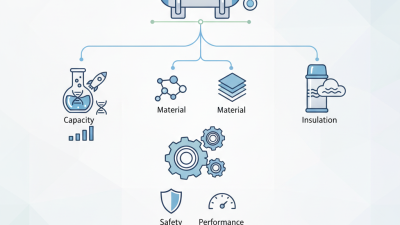
This guide examines how to compare a cryogenic hydrogen storage tank for fueling stations, laboratories, transport hubs, and industrial facilities. It considers usable capacity rather than the nameplate figure. It also reviews vacuum-jacketed insulation, inner-vessel materials, pressure relief systems, instrumentation, boil-off management, and inspection access.
Look closely at the details. A tank standing outdoors may face sunlight, vibration, salt air, and uneven foundations. A tank installed indoors may create different ventilation and emergency-response concerns. Supplier test data matters, but field experience matters too.
There is no perfect tank.
A lower purchase price can hide higher gas losses. A larger vessel can reduce refilling frequency but complicate installation. Even a careful specification can miss local operating realities. Therefore, buyers should question every claimed efficiency figure, request documented performance data, and involve qualified engineers before approval. This approach supports a safer, more reliable, and more economical choice in 2026.
Define Cryogenic Hydrogen Storage Requirements and Operating Conditions
Choosing a cryogenic hydrogen storage tank in 2026 starts with defining the real operating duty. Liquid hydrogen is stored near 20 K, where small heat leaks can create continuous boil-off. Record the required inventory, filling frequency, withdrawal rate, and maximum holding time. A tank for daily vehicle fueling faces different demands than one serving a laboratory or remote energy site.
Specify normal and abnormal conditions before comparing tank designs. Document working pressure, design pressure, vacuum requirements, ambient temperature, wind exposure, and seismic loads. Include transfer-line losses, pressure-build cycles, and emergency vent capacity. Vacuum-insulated construction usually improves thermal performance, but insulation quality must be verified during acceptance testing. A minor vacuum degradation can become an expensive operational problem.
Field experience shows that inlet and outlet sizing is often underestimated. Rapid filling may cause temperature stratification, while uneven withdrawal can disturb pressure control. Ask for measured boil-off data, instrumentation accuracy, relief-device settings, and inspection access. Materials must remain tough at cryogenic temperatures and resist hydrogen-related degradation. Qualified engineers should review applicable pressure-vessel, fire-safety, and site requirements. Real conditions may differ from the specification. Recheck them. A spreadsheet cannot capture every blocked vent, delayed delivery, or winter startup. Allow practical space around the tank, clear operator sightlines, and reliable grounding. Oversizing can increase cost and boil-off losses, while undersizing may interrupt production.
Compare Tank Designs, Materials, Insulation, and Hydrogen Capacity
How to Choose a Cryogenic Hydrogen Storage Tank in 2026?
Tank design should match hydrogen demand, transfer frequency, and available space.
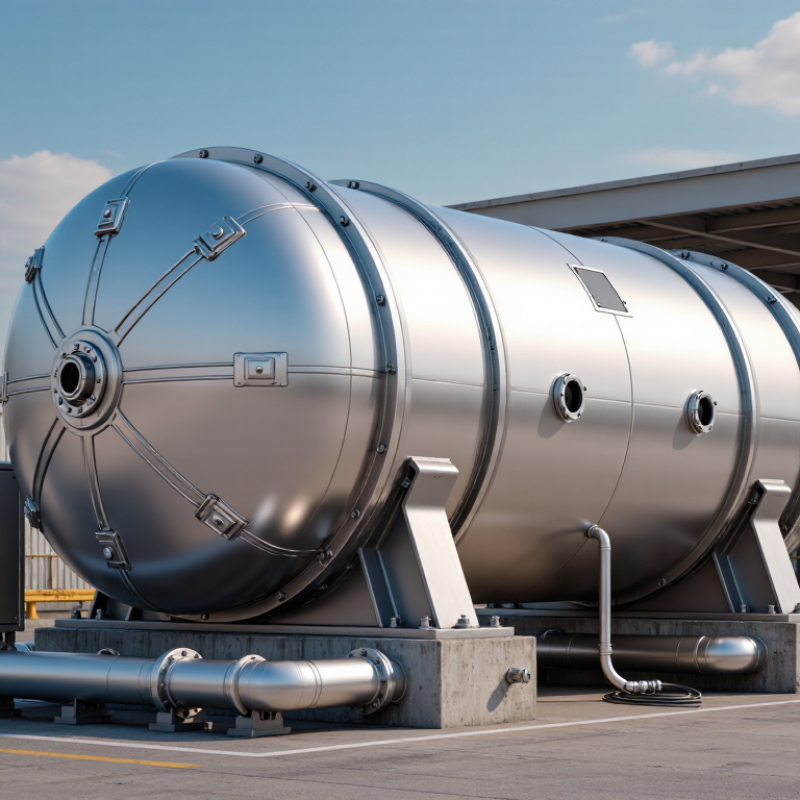
A double-wall vessel with a vacuum jacket limits heat transfer better than a simple insulated shell. Multilayer insulation can reduce radiation losses, while perlite insulation may offer a simpler maintenance profile. The U.S. Department of Energy identifies liquid hydrogen storage near −253°C, requiring careful control of thermal contraction and pressure rise. Small errors matter.
Materials deserve equal attention. Austenitic stainless steel and selected aluminum alloys can retain toughness at cryogenic temperatures. Ordinary carbon steel can become brittle. According to NIST reference data, liquid hydrogen has a density near 70.8 kilograms per cubic meter. Therefore, a 100-cubic-meter tank could contain about 7.1 tonnes before accounting for ullage and usable operating limits. Real capacity is lower.
Insulation also affects hydrogen capacity over time.
A warmer tank creates boil-off, reducing stored inventory and increasing vent-management demands. The IEA’s Global Hydrogen Review 2024 reports global hydrogen demand reached almost 100 million tonnes in 2023, highlighting the need for dependable bulk storage. Yet demand forecasts do not replace site testing. A tank designed for steady industrial use may perform poorly during irregular loading. Check vacuum stability, relief settings, cycling history, and actual boil-off data. The specification sheet may look complete. It rarely is.
Evaluate Safety Systems, Standards, Testing, and Regulatory Compliance
How to Choose a Cryogenic Hydrogen Storage Tank in 2026?
A suitable tank begins with a documented safety review, not a low purchase price. Check double-wall construction, vacuum insulation, pressure relief devices, and controlled vent routing. Gas detectors should cover likely leak zones, including valves, flanges, and transfer connections. Emergency shutdown controls must remain accessible during a cold-weather incident. Grounding and separation distances also require site-specific verification. Hydrogen can escape through very small gaps.
Standards should match the tank design, installation location, and operating pressure. Review applicable pressure-vessel rules, cryogenic vessel standards, hydrogen safety codes, and local authority requirements. ISO, EN, ASME, and national regulations may overlap, but they are not automatically interchangeable. Ask for material certificates, weld records, design calculations, and traceable inspection reports. Pay particular attention to hydrogen compatibility and embrittlement risks.
Testing should include dimensional checks, weld non-destructive examination, pressure testing, vacuum retention, leak testing, and functional checks of relief systems. Thermal cycling can expose weaknesses that ordinary factory inspections miss. Request test conditions, acceptance limits, calibration dates, and independent verification. A certificate alone is not enough. I would also inspect the actual installation route, because a compliant tank can become unsafe beside poor ventilation or an unprotected impact area. Some specifications look complete on paper. They are not always complete in practice.
How to Choose a Cryogenic Hydrogen Storage Tank in 2026?
Hydrogen properties that directly influence insulation, pressure-relief design, materials selection, ventilation, leak detection, and regulatory testing.
Values are established reference properties: normal boiling point 20.28 K, critical temperature 33.18 K, liquid hydrogen density at its boiling point approximately 70.8 kg/m³, flammability range in air 4–75 vol%, and liquid-to-gas expansion of approximately 1:848 at ambient conditions. These values are technical inputs, not a tank safety rating; final selection should verify applicable ASME, EN, ISO, NFPA, pressure-equipment, inspection, and local regulatory requirements.
Calculate Lifecycle Costs, Maintenance Needs, and Site Requirements
How to Choose a Cryogenic Hydrogen Storage Tank in 2026?
Lifecycle cost starts with more than the purchase price. Estimate hydrogen capacity, delivery frequency, electricity, boil-off, inspections, and replacement parts. The IEA’s Global Hydrogen Review 2024 reports nearly 100 million tonnes of global hydrogen demand in 2023. That scale increases pressure to control every kilogram lost onsite. Calculate annual losses using tank capacity, average boil-off rate, operating days, and local hydrogen prices. Use measured site data when possible. Design estimates can be optimistic.
Maintenance requirements deserve equal attention. U.S. DOE H2Tools guidance highlights insulation performance, pressure control, vent systems, and material integrity as recurring safety concerns. Ask how technicians will inspect vacuum spaces, valves, sensors, foundations, and emergency shutdown systems. Record labor hours and planned downtime in the cost model. A cheap tank may become expensive when specialist access is limited. Very expensive, sometimes.
Site requirements can change the decision. Reserve space for vehicle access, separation distances, ventilation, drainage, fencing, and safe vent discharge. Check soil conditions and foundation loads before selecting tank dimensions. NFPA 2 provides hydrogen separation and safety provisions, while local authorities may impose additional requirements. Include permitting time and future expansion capacity. A 20% capacity margin may help, but it should follow demand evidence, not habit. The weak point is often not the tank. It is an incomplete site survey.
How to Choose a Cryogenic Hydrogen Storage Tank in 2026? - Calculate Lifecycle Costs, Maintenance Needs, and Site Requirements
| Storage Option |
Nominal Capacity
(L LH₂) |
Approx. Hydrogen Inventory
(kg) |
Typical Operating Pressure
(barg) |
Expected Boil-Off
(% per day) |
Estimated Annual H₂ Loss
(kg) |
Indicative Installed Cost
(USD) |
Annual Maintenance
(% of CAPEX) |
Estimated 20-Year Lifecycle Cost
(USD) |
Indicative Site Requirements |
Best-Fit Application |
| Small vacuum-jacketed vessel |
5,000 |
354 |
2–10 |
0.15–0.30 |
194–387 |
$0.8–1.5 million |
2.0–4.0% |
$1.4–2.8 million |
Concrete foundation, vehicle access, pressure-relief discharge routed to a safe outdoor location, and approximately 3–5 m of access space around equipment. |
Laboratories, pilot plants, backup fuel, and low-throughput hydrogen stations. |
| Medium horizontal storage tank |
20,000 |
1,416 |
2–10 |
0.10–0.20 |
517–1,033 |
$1.8–3.5 million |
2.0–3.5% |
$3.0–5.7 million |
Reinforced foundation, tanker delivery access, separation from ignition sources, hydrogen detection, ventilation, and approximately 4–6 m of maintenance clearance. |
Fleet depots, industrial users, medium-scale laboratories, and distributed energy projects. |
| Large horizontal storage tank |
40,000 |
2,832 |
2–10 |
0.07–0.15 |
724–1,551 |
$3.0–5.5 million |
1.5–3.0% |
$4.9–8.7 million |
Industrial-grade foundation, heavy-vehicle circulation, dedicated unloading area, gas detection, electrical classification review, and approximately 5–8 m of service clearance. |
High-utilization fueling stations, manufacturing sites, and backup power hubs. |
| Very large bulk storage tank |
100,000 |
7,080 |
2–10 |
0.04–0.10 |
1,033–2,584 |
$6.0–11.0 million |
1.0–2.5% |
$8.5–15.6 million |
Large reinforced foundation, controlled tanker routes, emergency-access roads, extensive hazardous-area assessment, detection and ventilation systems, and approximately 8–12 m of operational clearance. |
Liquid-hydrogen distribution terminals, large mobility hubs, aerospace operations, and continuous industrial demand. |
Planning assumptions: Hydrogen inventory is calculated using an approximate liquid-hydrogen density of 0.0708 kg/L. Lifecycle-cost estimates use a 20-year operating period, an indicative delivered hydrogen value of $8/kg, annual maintenance based on the installed capital cost, and no financing, land, taxes, insurance, or major replacement costs. Actual boil-off depends on tank geometry, insulation performance, ambient temperature, fill level, withdrawal rate, and operating procedures.
Compliance note: Final layout, separation distances, pressure-relief design, hazardous-area classification, fire protection, inspection intervals, and permitting must be verified against the applicable local fire code, pressure-equipment rules, hydrogen standard, environmental requirements, and authority having jurisdiction.
Select a Tank Supplier and Verify Performance Before Installation
Choosing a cryogenic hydrogen tank starts with the supplier, not the catalogue. Hydrogen boils near −253°C, so insulation quality, vacuum stability, and pressure control directly affect operating cost. The IEA’s Global Hydrogen Review 2024 reported global hydrogen demand of about 97 million tonnes in 2023. Even small storage losses matter at that scale.
Request evidence before signing. Check material traceability, weld inspection records, vacuum testing, relief-device sizing, and documented heat-leak performance. Ask for the expected holding time at your actual filling pressure and duty cycle. ISO 21009-1 addresses static vacuum-insulated vessels, while NFPA 2 provides hydrogen safety requirements. These references do not replace site engineering. A polished datasheet can still conceal weak assumptions. I would ask for a factory acceptance test, then repeat critical checks during commissioning. Verify pressure stability, sensor accuracy, emergency shutdown response, and vent routing before introducing hydrogen.
Tips: Compare measured boil-off data, not marketing percentages. Require a clear warranty for vacuum degradation. Inspect transport restraints and foundation loads. Confirm maintenance access around valves and instruments. Keep independent test records. The Global Hydrogen Review also notes that low-emissions hydrogen remains a small share of production, so future supply may change quickly. Select equipment that tolerates changing operating schedules. This is often missed.