How to Choose a Cryo Dewar Liquid Nitrogen Tank?
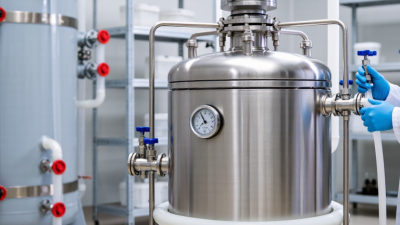
Choosing a cryo dewar liquid nitrogen tank is a practical decision, not a simple capacity comparison. The right model must match your storage volume, withdrawal frequency, laboratory layout, and operating discipline. A tank that looks efficient on paper may waste nitrogen through excessive evaporation. It may also become awkward to move when filled.
Dr. R. B. Scott, a respected cryogenic engineering author, stated, “Cryogenic engineering is concerned with the production and use of low temperatures.” That principle still matters. A cryo dewar liquid nitrogen tank is a thermal system, not merely a metal container. Its vacuum insulation, neck design, pressure-relief system, and material quality all influence daily performance. Look for verified specifications, traceable manufacturing information, and clear maintenance guidance. Do not rely only on attractive photographs or impressive advertised capacity.
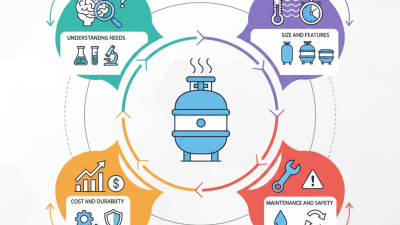
Measure the real need first. Small dewars suit occasional laboratory transfers, while larger vessels support repeated use and reduce refill interruptions. Consider static evaporation rates, usable capacity, access height, wheel quality, and compatibility with your handling equipment. The safest choice includes suitable venting and a controlled storage area. Personnel also need training for cold-contact hazards, splashing, and oxygen displacement.
There is no perfect tank.
I would not pretend that one checklist solves every installation. Room size, local procedures, and supplier support can change the decision. A careful comparison should therefore include operating records, inspection routines, and emergency planning. The best tank is the one your team can operate confidently, inspect consistently, and maintain without guesswork.
Cryogenic Basics: Liquid Nitrogen Boils at 77 K (−196°C)
How to Choose a Cryo Dewar Liquid Nitrogen Tank?
Liquid nitrogen boils at 77.355 K, or about −196°C, under normal atmospheric pressure, according to the NIST Chemistry WebBook. This temperature is not a minor specification. It drives evaporation, pressure behavior, material selection, and handling requirements. At room temperature, one liter of liquid nitrogen can produce roughly 696 liters of nitrogen gas, based on standard gas-volume calculations. A dewar therefore needs controlled venting, not simple airtight storage.
Choose capacity from actual usage, not the largest available vessel. A 10-liter tank may suit occasional sample transfer, while frequent laboratory work may justify a larger unit with lower static evaporation. Check the manufacturer’s reported evaporation rate under defined test conditions. The value can change with ambient temperature, lid position, filling frequency, and transport. I once treated a quoted holding time as absolute. That shortcut was unreliable.
Inspect the neck opening and access height carefully. A narrow neck usually reduces heat entry, but it can slow retrieval and complicate compatible racks. ISO 21010 emphasizes cryogenic equipment performance and safety considerations, while CGA P-12 recommends ventilation, protective equipment, and careful transfer practices. Select vacuum-insulated construction, a stable base, secure handles, and a pressure-relief path. Never seal the vessel. A cold tank can look calm while liquid is rapidly vaporizing inside. Track daily losses for several weeks before finalizing your capacity choice. Real operating data often reveals assumptions that catalog figures miss.
Capacity Planning: Match Tank Volume to Daily LN₂ Consumption
When choosing a cryo dewar liquid nitrogen tank, start with measured daily consumption, not advertised capacity. Record usage for at least two weeks, including vessel filling, sample handling, and overnight losses. A laboratory using 18 liters each day may need more than a 180-liter tank. Tank volume should cover delivery intervals, operating demand, and a practical reserve. A useful planning range is 1.5 to 2 times average consumption between deliveries, adjusted for actual boil-off.
Capacity alone can mislead. A large tank may reduce deliveries, yet it can waste nitrogen when demand is low. Compare static evaporation rates under your expected room conditions. Check the usable liquid level, not only the vessel’s total volume. Leave room for weekends, delayed deliveries, and seasonal demand. For the example above, a five-day interval requires about 90 liters of working supply. Adding reserve may support a 150- to 200-liter selection, depending on evaporation performance.
Keep a simple log after installation. Measure liters added, days elapsed, and remaining level. Then revise the estimate. Forecasts are rarely perfect. A new freezer, busy training week, or warm storage room can change demand quickly. Do not treat reserve capacity as permission to postpone inspections. Staff should verify alarms, ventilation, pressure relief, and filling procedures using the tank manual and site risk assessment. A slightly smaller tank with reliable deliveries may outperform an oversized unit that stands half empty. That choice deserves evidence.
How to Choose a Cryo Dewar Liquid Nitrogen Tank? - Capacity Planning: Match Tank Volume to Daily LN₂ Consumption
Planning guide based on a seven-day refill cycle, an 80% usable operating volume, and a recommended reserve for routine evaporation, handling losses, and delivery delays.
| Application Profile |
Typical Daily LN₂ Consumption
(L/day) |
Suggested Nominal Tank Volume
(L) |
Approximate Usable Volume at 80% Fill
(L) |
Estimated Autonomy at Stated Consumption
(Days) |
Recommended Refill Cycle
(Days) |
Reserve After a 7-Day Cycle
(Approx. Days) |
Capacity Planning Recommendation |
| Low-throughput sample storage |
2 |
20 |
16 |
8 |
7 |
1 |
Suitable for small inventories and infrequent access. |
| Routine laboratory use |
5 |
50 |
40 |
8 |
7 |
1 |
Provides practical weekly capacity for regular laboratory activity. |
| Moderate sample storage |
10 |
100 |
80 |
8 |
7 |
1 |
Appropriate when inventory and withdrawal frequency are increasing. |
| High-use laboratory or clinical storage |
20 |
250 |
200 |
10 |
7 |
3 |
Allows additional operational margin for busy periods and delayed deliveries. |
| Multi-user facility |
40 |
500 |
400 |
10 |
7 |
3 |
Recommended for several users, frequent access, or multiple storage systems. |
| Large centralized storage operation |
80 |
1,000 |
800 |
10 |
7 |
3 |
Consider fixed bulk storage when consumption is consistently high. |
Planning assumptions:
Suggested nominal volume is rounded upward from the calculated requirement for seven days of consumption while maintaining approximately 20% reserve capacity. The usable-volume estimate assumes that only 80% of the nominal tank volume is treated as available for routine operation. Actual holding time depends on tank design, static evaporation rate, ambient temperature, lid or neck-tube openings, transfer frequency, and delivery reliability. Liquid nitrogen density is approximately 0.8 kg/L near its boiling point, so mass-based consumption can be converted to volume using this approximate factor.
Performance Metrics: Compare Static Holding Times and Evaporation Rates
A cryogenic dewar should be chosen by measured static holding time, not capacity alone. NIST thermophysical data places liquid nitrogen’s boiling point near -196°C at atmospheric pressure. Its density is about 0.808 kg/L, and vaporization requires roughly 199 kJ/kg. These values explain why small heat leaks create steady losses. One liter can produce approximately 640 liters of nitrogen gas at standard conditions. That is substantial.
Compare evaporation rates under identical conditions. A useful specification is liters lost per day, measured with a full vessel, closed lid, and stable room temperature. ISO 21009-1 emphasizes performance testing for cryogenic vessels, while NIST REFPROP data supports the thermal calculations behind such tests. A tank rated for 0.5% daily loss may appear efficient, but the practical loss changes when samples enter, the lid opens, or the room reaches 30°C. Check the test method carefully.
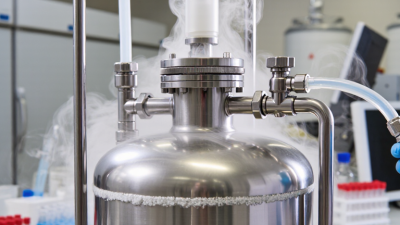
Static holding time is more practical for laboratories. If a 30-liter tank loses 0.15 liters daily, its theoretical reserve lasts 200 days. Real operation will shorten that period. A temperature logger, weighing scale, and weekly inspection reveal more than a brochure. Do not compare “days” without checking usable volume, because residual liquid may not protect samples effectively. The neat calculation is incomplete. Condensation around the neck is also a warning sign, although it is not a precise evaporation measurement.