Blog

What Is an LN2 Supply Tank?

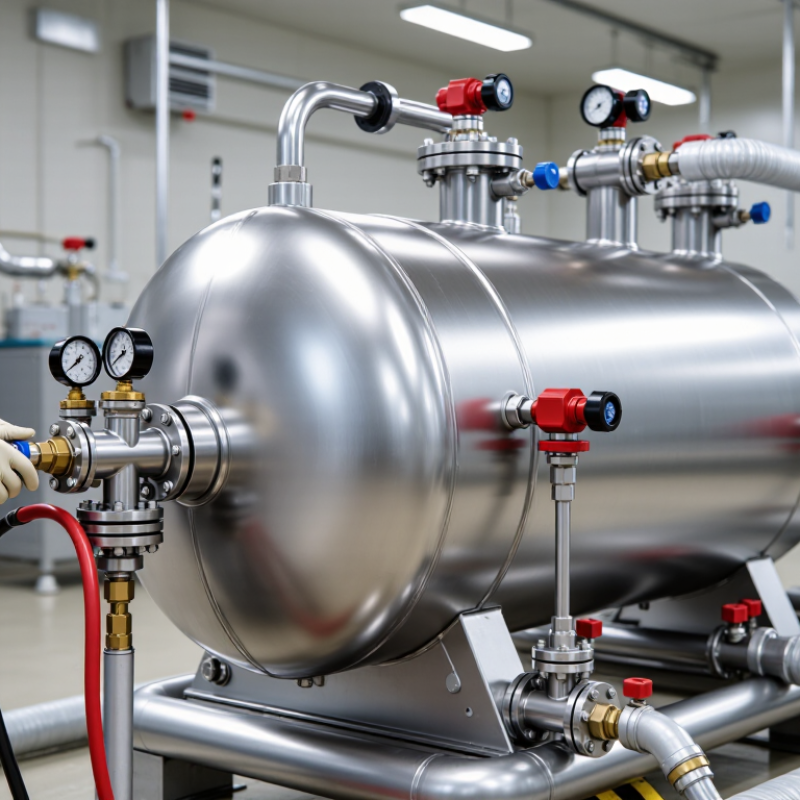
An ln2 supply tank stores and delivers liquid nitrogen for laboratories, medical facilities, manufacturing plants, and research sites. LN2 remains extremely cold, near −196°C, so the tank must control temperature, pressure, and evaporation carefully. It is not simply a large metal container. It is an engineered system with vacuum insulation, pressure controls, relief devices, valves, and transfer connections.

The outer shell protects the insulated inner vessel. The insulation slows heat entering the tank, while the pressure system manages nitrogen gas created through natural evaporation. Some models support manual filling, while larger units connect to automatic delivery systems and remote level monitoring. A visible gauge may show liquid volume, but readings can change with temperature and pressure. Small details matter.

Experienced technicians inspect hoses, fittings, vents, and alarm functions before use. They also confirm adequate ventilation because nitrogen can displace oxygen in enclosed areas. A reliable installation includes clear operating procedures, suitable personal protective equipment, and scheduled maintenance by qualified personnel. Manufacturer instructions and applicable safety standards should guide every decision.

A neat specification sheet does not guarantee a suitable tank. Site conditions, usage rate, delivery frequency, and emergency planning all influence the correct choice. Even a well-designed system needs regular review. This article explains how an ln2 supply tank works, what its main components do, and which practical factors affect safe, dependable operation. Mistakes can happen. Good engineering anticipates them.
What Is an LN2 Supply Tank?

Definition and Purpose of an LN2 Supply Tank

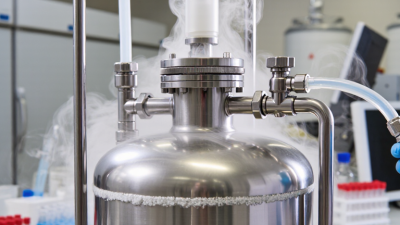
An LN2 supply tank is a vacuum-insulated vessel designed to store liquid nitrogen for controlled use. LN2 remains near -196°C at atmospheric pressure, so the tank uses an inner steel container, insulation, pressure controls, and safety relief devices. Its purpose is practical: it provides a steady nitrogen supply between deliveries. Hospitals, laboratories, food processors, and industrial sites use these tanks for freezing, inerting, cooling, and sample preservation.

Tank size depends on consumption, delivery access, and required reserve time. A larger vessel can reduce delivery frequency, but it also increases installation space and inspection responsibilities. The MarketsandMarkets report, Cryogenic Tanks Market—Global Forecast to 2028, valued this market at several billion U.S. dollars and projected continued growth through 2028. That trend reflects wider demand for reliable cryogenic storage, not proof that every facility needs a larger tank. This distinction is often missed.

Tips: Keep the tank in a well-ventilated area. Nitrogen can displace oxygen without warning. Install oxygen monitoring where ventilation may be limited. Check pressure readings, relief devices, valves, and visible frost routinely. CGA guidance recommends documented operating procedures and trained personnel for cryogenic systems. In practice, records may look perfect while a leaking transfer hose is overlooked. A careful walk-around still matters. Always confirm the tank’s working pressure, usable volume, and emergency plan with a qualified cryogenic engineer.
What Is an LN2 Supply Tank? — Definition and Purpose

An LN2 supply tank is an insulated vessel designed to store and deliver liquid nitrogen at cryogenic temperatures. The chart shows the approximate liquid nitrogen mass associated with common nominal tank capacities, calculated using a liquid nitrogen density of approximately 0.808 kg/L at its normal boiling point of −196 °C. Actual usable capacity varies with tank design, fill limits, and operating conditions.

Key Components and Tank Design

What Is an LN2 Supply Tank?

An LN2 supply tank stores liquid nitrogen for laboratories, medical facilities, and industrial processes. Its design must control extreme cold, pressure changes, and continuous evaporation. NIST data lists nitrogen’s normal boiling point near -196°C, with liquid density around 0.808 kg/L. Each exposed surface can increase heat input and product loss.

Key Components and Tank Design

A typical tank uses a stainless-steel inner vessel, an outer jacket, and vacuum insulation. Many designs also include multilayer insulation to reduce radiant heat transfer. Critical components include fill lines, withdrawal lines, pressure gauges, level indicators, and spring-loaded relief valves. A rupture disc may provide secondary pressure protection. The Compressed Gas Association’s P-12 guidance emphasizes ventilation, pressure relief, and safe cryogenic handling.

Small details matter.

Tank capacity should match actual consumption, delivery frequency, and acceptable reserve time. A larger tank is not automatically safer. That assumption needs review. Oversized storage can increase holding losses when demand remains low. NIST property data indicates nitrogen’s vaporization requires roughly 199 kJ/kg, so unwanted heat rapidly creates gas pressure. Designers should evaluate vacuum performance, foundation loading, pipe flexibility, and outdoor temperature changes. ASME pressure-vessel requirements also influence wall thickness and inspection planning. In occupied areas, oxygen-deficiency monitoring and unobstructed vent routing deserve special attention. A poorly placed vent can turn a quiet storage corner into a serious hazard.

What Is an LN2 Supply Tank? - Key Components and Tank Design

Design Dimension Key Component or Parameter Typical Specification or Data Function and Design Considerations
Definition LN2 supply tank An insulated vessel used to store and supply liquid nitrogen at approximately −196°C (77 K) under controlled pressure. Provides a stable source of liquid nitrogen for laboratory, medical, industrial, food-processing, and cryogenic applications.
Storage capacity Nominal vessel volume Common stationary tank sizes range from approximately 100 L to more than 10,000 L, depending on demand and site layout. Capacity should account for operating reserve, delivery frequency, usable fill level, and expected evaporation losses.
Tank construction Double-wall vessel An inner vessel holds LN2, while an outer jacket surrounds it to support insulation and protect the system. The annular space between the walls reduces heat transfer and helps maintain cryogenic temperature.
Material selection Inner vessel material Cryogenic-compatible stainless steel is commonly used because it retains suitable mechanical properties at very low temperatures. Materials must resist brittle fracture, thermal cycling, corrosion, and contamination of the stored nitrogen.
Insulation system Vacuum jacket and insulation High-vacuum insulation is commonly combined with reflective insulation layers to limit radiation and conduction heat transfer. Effective insulation reduces boil-off, improves holding time, and lowers the frequency of refilling.
Operating pressure Pressure-building circuit Many supply tanks operate at low positive pressure, commonly within approximately 1.5–10 bar(g), subject to vessel design. A pressure-building coil vaporizes a controlled amount of LN2 to maintain delivery pressure without using an external pump.
Liquid outlet Liquid withdrawal valve and dip tube A dip tube extends into the liquid phase and connects to a dedicated cryogenic outlet valve. Provides liquid nitrogen to transfer lines, vaporizers, process equipment, or point-of-use storage vessels.
Gas outlet Vapor withdrawal connection A separate gas-phase outlet can supply nitrogen vapor or connect to a pressure-regulation and vaporization system. Allows the tank to support gaseous nitrogen demand when liquid delivery is not required.
Pressure protection Relief valves and rupture disc The vessel is fitted with pressure-relief devices sized for credible overpressure scenarios, including heat input and blocked outlets. Prevents the tank from exceeding its allowable working pressure. Relief devices must never be isolated during operation.
Level measurement Differential-pressure or weight-based gauge Liquid level is commonly indicated as a percentage of usable capacity or as an estimated liquid volume. Supports inventory control, delivery scheduling, low-level alarms, and prevention of unexpected supply interruption.
Boil-off performance Evaporation or holding loss Static evaporation is often specified as a percentage of vessel volume per day; actual performance varies with size, insulation, ambient conditions, and usage. Lower heat leak improves storage efficiency. Frequent withdrawals can increase vapor generation and pressure cycling.
Transfer piping Vacuum-jacketed or insulated line Transfer lines are designed to limit heat input and accommodate contraction during cooldown to cryogenic temperature. Proper routing, supports, flexible sections, and compatible seals help reduce leakage and mechanical stress.
Filling arrangement Fill connection and vent path The filling system typically includes a fill valve, vent or return connection, check valve, and connections for a delivery hose. The arrangement should minimize splash, control pressure during filling, and provide safe venting of displaced gas.
Structural design Supports, legs, or saddle mounts The support structure is designed for the vessel's operating weight, seismic or wind loads where applicable, and handling forces. Foundations should be level, load-bearing, and suitable for the tank's filled weight and local installation conditions.
Safety monitoring Oxygen-deficiency monitoring Indoor installations may require oxygen monitors, alarms, mechanical ventilation, and emergency procedures. Nitrogen is nonflammable but can displace oxygen. Ventilation and atmospheric monitoring are essential in enclosed spaces.
Operating temperature Liquid nitrogen temperature At approximately atmospheric pressure, LN2 boils at about −196°C (−321°F). All wetted components, seals, instruments, and transfer accessories must be rated for cryogenic service.
Design standards Pressure-vessel compliance Design, fabrication, inspection, and testing should follow applicable pressure-vessel, cryogenic-equipment, transport, and local safety requirements. The required code depends on jurisdiction, tank classification, installation type, operating pressure, and intended service.
Selection criteria Demand and site conditions Key inputs include peak flow, average consumption, required autonomy, available footprint, delivery access, indoor or outdoor location, and ambient climate. Correct sizing balances storage capacity, pressure stability, boil-off rate, refill logistics, safety requirements, and lifecycle cost.

Note: Specifications shown are typical reference ranges for general design discussion. Final tank selection, installation, inspection, and operation must comply with the applicable local regulations and the equipment manufacturer's certified data.

How an LN2 Supply Tank Stores and Delivers Nitrogen

What Is an LN2 Supply Tank?

An LN2 supply tank stores liquid nitrogen at approximately -196°C. Its main vessel uses vacuum insulation to slow heat transfer and reduce evaporation. A stainless-steel inner container holds the liquid, while an outer shell protects the insulation space. Even with strong insulation, some nitrogen gradually becomes gas. This natural loss is called boil-off.

The tank delivers nitrogen through controlled pressure or a transfer pump. When pressure rises, a pressure-building circuit can vaporize a small amount of liquid nitrogen. The resulting gas increases head pressure and pushes liquid through an insulated outlet line. Some systems deliver liquid directly, while others supply nitrogen gas through a vaporizer. Flow depends on the equipment, line length, pressure setting, and withdrawal rate.

Pressure relief devices protect the vessel from excessive pressure. Gauges show internal pressure, but they do not always reveal the remaining liquid level accurately. Operators should check valves, fittings, hoses, and frost patterns before use. A sudden ice buildup may indicate restricted flow or insulation damage. Ventilation is essential because released nitrogen can displace oxygen. Keep the area monitored.

Small details matter. A loose connection can waste nitrogen quickly. No inspection routine is flawless, and unusual sounds should not be ignored. Trained personnel must follow site procedures, wear suitable protective equipment, and avoid contact with cold surfaces. A tank may appear quiet while pressure is changing inside.

Common Applications Across Industries

What Is an LN2 Supply Tank?

Common Applications Across Industries

An LN2 supply tank stores liquid nitrogen at extremely low temperatures. It supplies nitrogen steadily through insulated lines and controlled valves. Unlike small dewars, larger tanks support continuous industrial operations. Their design includes pressure controls, level gauges, vacuum insulation, and emergency venting. Operators must check frost patterns, pressure readings, and connection points during routine inspections. These details often reveal problems before production is affected.

In healthcare, LN2 tanks preserve biological samples, vaccines, and specialized laboratory materials. Research facilities use them for cell storage, cryogenic testing, and temperature-sensitive experiments. Food processors may use liquid nitrogen for rapid freezing, portion control, and texture development. The visible vapor around a freezing tunnel can look dramatic, but it does not confirm correct performance. Temperature records and calibrated instruments matter more.

Manufacturing plants use LN2 in metal treatment, electronics production, and inerting processes. It can reduce heat during machining or protect reactive materials from oxygen exposure. In pharmaceutical facilities, controlled nitrogen supply supports processing and storage environments. Tank size depends on demand, delivery schedules, insulation quality, and acceptable pressure changes. A larger tank is not automatically better. It may reduce deliveries, but it also requires more space and stronger safety planning. The best system balances capacity with real operating data. That decision deserves review.

Safety, Maintenance, and Handling Requirements

What Is an LN2 Supply Tank?
Safety, Maintenance, and Handling Requirements

An LN2 supply tank stores liquid nitrogen at extremely low temperatures. Its safe use depends on controlled pressure, sound insulation, and trained handling. Liquid nitrogen can freeze skin instantly and displace oxygen in enclosed rooms. The danger may be invisible.

Wear a face shield, cryogenic gloves, a closed lab coat, and protective footwear. Do not rely on ordinary work gloves. Keep the tank upright and secure it before moving. Use a suitable cart, never drag it across the floor. Check that the area has effective ventilation and an oxygen monitor. A quiet room is not always a safe room.

Inspect valves, hoses, relief devices, and connecting points before each use. Frost can indicate a leak or damaged insulation. Never block a vent or seal liquid nitrogen inside an airtight container. Record pressure, inspection dates, unusual noises, and frost patterns. Small details matter. During filling, pour slowly and avoid standing above the opening. Maintenance schedules should follow the tank’s technical instructions and local safety requirements. A clean exterior can mislead; hidden damage may remain. I would rather pause a transfer than explain an avoidable injury.