
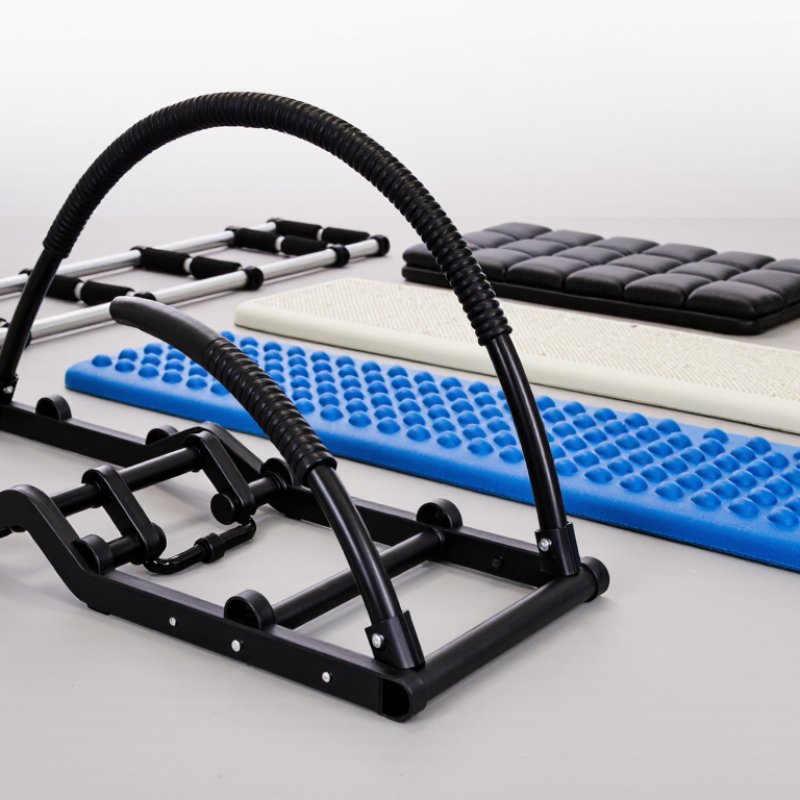
A back stretcher board is a curved support placed beneath the back while a person lies face-up. Its raised center contacts the spine area, while the ends support the torso. As the body settles over the arch, gravity encourages a gentle backward bend. The board does not actively pull vertebrae apart or guarantee spinal “realignment.” Small distinction, but an important one.
Common designs use a fixed arch or adjustable height settings. Some include raised contact points, which may feel intense on tight muscles.
Start with the lowest setting and a short session, then stop if pain, numbness, or tingling appears. A board is not suitable for every cause of back pain, and it should not replace clinical advice when symptoms persist or worsen.
The World Health Organization’s 2023 low back pain fact sheet reports that about 619 million people experienced low back pain in 2020, with projections reaching 843 million by 2050.
That figure describes the scale of the problem, not proof that stretcher boards treat it. Their effect depends on the person, the condition, and how the device is used. A little skepticism helps.