Blog

7 Buying Tips for Freestanding Bratt Pans

A busy kitchen rarely has room for equipment that looks impressive but slows service. Choosing a Freestanding Bratt Pan means weighing capacity, heat control, cleaning, installation, and staff workflow together. The National Restaurant Association’s 2024 State of the Restaurant Industry report projected U.S. restaurant and foodservice sales at $1.1 trillion, with 15.7 million workers. That scale points to demanding operations, but it does not prove that every kitchen needs the same pan. A useful purchase starts with your own menu, service peaks, and available space.

Measure the route from delivery door to cooking line. Check the pan’s footprint, working height, power or fuel supply, and clearance for the lid. Then compare usable cooking area, tilting controls, temperature consistency, drainage, and how easily staff can clean corners after a busy shift. Ask suppliers for demonstrations using foods you actually serve, such as sauce, vegetables, or a full batch of mince. Watch for uneven browning. It matters.

Warranty terms, local service access, spare-part availability, and installation costs can change the real value of a lower-priced model. Request written specifications and confirm them against your kitchen’s requirements before ordering. A sales brochure is not a test. There is no perfect shortlist, and some performance claims can be difficult to compare across brands. These seven buying tips offer a practical starting point, not a substitute for checking the equipment in your own workflow.
7 Buying Tips for Freestanding Bratt Pans

Understand the Functions and Uses of a Freestanding Bratt Pan

7 Buying Tips for Freestanding Bratt Pans

Understand the Functions and Uses of a Freestanding Bratt Pan

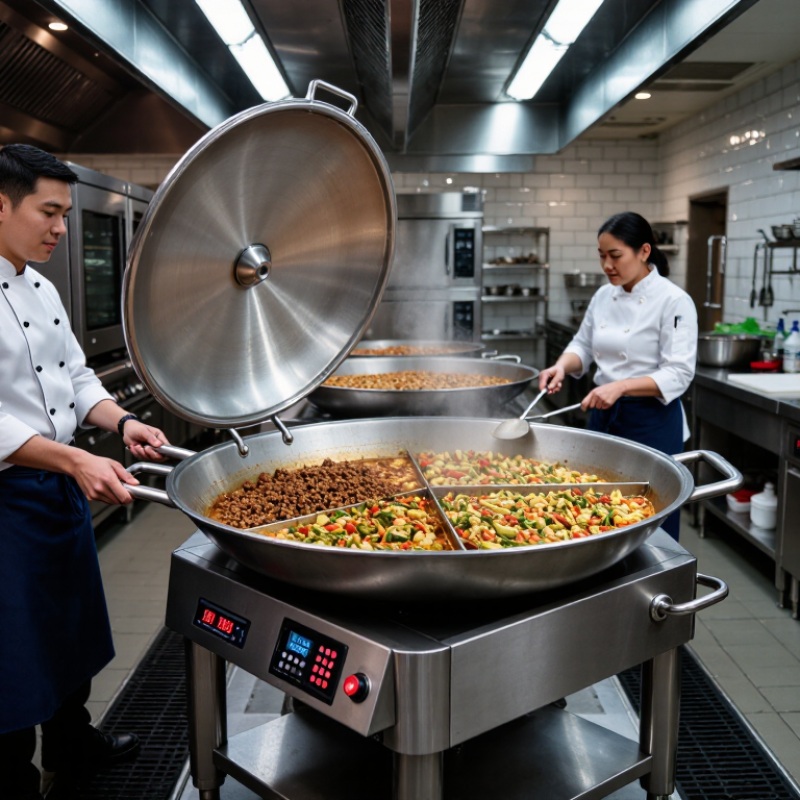
A freestanding bratt pan is a large, heated cooking vessel designed for busy commercial kitchens. Its broad, shallow surface supports browning, sautéing, shallow frying, simmering, and braising. Many models tilt, so staff can transfer food into trays without lifting a heavy pot. That matters when cooking stew or sauce in large batches. Some units also support boiling, but check the manufacturer’s operating guidance before planning that use. Controls and heating performance vary by model.

Tips: Match pan capacity to your busiest service, not an unusually quiet day. Check the available floor space, power or gas supply, and clearance for tilting. Ask how the pan drains and how its interior is cleaned. A model that looks roomy may still be awkward to empty when crowded.

Before buying, consider the food you prepare most often. A kitchen making seared meat and braised vegetables may value even heat and precise temperature control. A team preparing soups may care more about capacity and easy transfer. Request a demonstration with a realistic batch size, if possible. Watch for hot spots and test whether the controls are easy to reach. One detail is easy to overlook: staff need room to work safely around the tilted pan. Capacity alone is not a complete buying decision.

Choose a Capacity That Matches Your Kitchen’s Workload

A bratt pan that is too small forces extra batches; one that is too large can waste heat and floor space. Size it around your busiest realistic service, not the average Tuesday. The National Restaurant Association’s 2024 State of the Restaurant Industry projected U.S. restaurant sales of $1.1 trillion. That broad forecast describes a high-volume sector, not a sizing rule for your kitchen. Your own order patterns matter more.

Tip: Review a week of production sheets. Count peak portions, batch sizes, and the time available before service. Check both the pan’s stated capacity and its cooking surface: stews need depth, while seared items need room to spread. Allow space for stirring and safe handling. A pan filled to the rim may look efficient, but it can slow cooking and make mixing awkward.

Before choosing, test your busiest recipe in a measured batch, then note the actual yield and cook time. Compare that result with your peak demand and planned service window. Ask staff who will load, stir, and clean the unit; their workflow can expose a capacity mismatch early. I would not size from liters alone. The menu changes, and forecasts miss. Leave a sensible margin, but verify that the larger unit fits your available utilities and cleaning routine.

Compare Heating Methods, Controls, and Temperature Range

When comparing freestanding bratt pans, start with the heat source. Gas models can respond quickly, while electric models may offer steadier, evenly distributed heat; actual performance depends on pan size, insulation, and installation. Check utility connections and ventilation before choosing. A wide temperature range is useful only if the pan can hold low settings without scorching sauces. I would not trust the dial alone.

Compare control types and how they behave under a full load. Digital controls can make settings easier to repeat, while simple thermostats may be easier to operate and maintain. Ask for the manufacturer’s tested operating range, recovery time, and temperature variation across the pan. FDA Food Code 2022 sets hot holding at 135°F (57°C) or above; this is a food-safety holding benchmark, not a cooking target. Small detail. Big difference.

Tip: Request a live demonstration with water or a small batch of food. Watch how evenly the base heats, then check temperatures in several spots with a calibrated probe. Test both a gentle simmer and a high-heat setting. That check takes time, but it can reveal cold corners or overshooting controls. I once assumed a higher maximum temperature meant better performance; it didn’t answer the more useful question: can the pan hold a steady, workable temperature during service?

Inspect Construction, Safety Features, and Cleaning Requirements

7 Buying Tips for Freestanding Bratt Pans

Inspect Construction, Safety Features, and Cleaning Requirements

A freestanding bratt pan should feel stable before it is switched on. Look for a rigid frame, even welds, and legs that sit firmly on the floor. Stainless steel is common, but the finish matters less if seams trap food or moisture. Small details matter. Check the hinge, too. A lid should open smoothly and stay secure, while the pan should tilt without jerking. If possible, test the controls and tilting action during a demonstration.

Safety features deserve close attention. Confirm that the unit has clear temperature controls, a dependable shutoff, and protection against accidental operation. Check the handle and surrounding surfaces; they should be positioned to reduce contact with hot areas. Ask how the pan connects to power or fuel, and have a qualified installer confirm the site is suitable. Requirements can vary. Don’t guess.

Cleaning can quietly shape daily workload. Ask whether the cooking surface has rounded corners, accessible edges, and a drain or outlet that is easy to clear. Removable parts should come out without awkward tools. Look for crevices around hinges and controls, where grease may collect. It is easy to focus on capacity and overlook cleanup. I would compare the cleaning steps with the kitchen’s actual routine, not just the instruction sheet. A quick wipe-down should not require moving the whole unit.

Review Installation Needs, Warranty, and Total Ownership Cost

7 Buying Tips for Freestanding Bratt Pans
Review Installation Needs, Warranty, and Total Ownership Cost

A freestanding bratt pan needs more than floor space. Check the route from delivery door to kitchen, including turns, thresholds, and lift capacity. Confirm power or gas supply, ventilation, drainage, and clearances with a qualified installer before ordering. A pan that cannot reach its position is an expensive surprise. Ask for written utility requirements and installation costs, not just a product quote.

Tip: Compare the warranty’s coverage, exclusions, and service response terms. Confirm who pays for travel, labor, and replacement parts after the initial period. Then estimate ownership costs over several years: purchase, installation, energy, cleaning, maintenance, and likely downtime. The U.S. ENERGY STAR program reports that certified commercial fryers use at least 30% less energy than standard models. That figure is not a bratt-pan benchmark, but it shows why equipment efficiency deserves scrutiny. Request operating data for the exact pan and your expected cooking pattern.

Before signing, ask a service technician to inspect access panels, controls, drain points, and parts availability. Compare the proposed pan’s capacity with real batch sizes; a large vessel may waste heat on small runs. Keep a little contingency in the budget. I would still want the supplier to clarify one point in writing: what happens if commissioning reveals that the site needs electrical or ventilation upgrades?

7 Buying Tips for Freestanding Bratt Pans — Review Installation Needs, Warranty, and Total Ownership Cost
No. Buying tip What to check Practical buying check Ownership impact
1 Match capacity to service volume Compare pan dimensions and usable cooking area with the quantity and types of food prepared per service. Estimate typical and peak batch sizes, menu needs, and how many batches can fit into the available cooking time. Confirm usable capacity with the supplier rather than relying on external dimensions alone. A pan that is too small can add labor and cooking time; an oversized unit can occupy valuable kitchen space and may use more energy than the workload requires.
2 Confirm power and connections Identify whether the model is gas-fired or electric, then confirm the required supply, connection type, and rated load. Have a qualified electrician or gas professional compare the equipment specification with the site supply. Electric models may require different voltage, phase, and current arrangements; gas models require a compatible gas supply. Connection upgrades, new circuits, gas work, and permits can add substantial upfront expense. Confirm these requirements before placing an order.
3 Review access and installation space Check doorways, corridors, lifts, turning space, floor condition, final position, and the clearances required for installation and operation. Measure the full delivery route and compare it with the unit’s shipping and operating dimensions. Follow the installation manual for clearances, ventilation, floor requirements, and access for servicing. Restricted access may require special handling or changes to the route. Poor service access can make routine repairs slower and more costly.
4 Check installation and commissioning scope Clarify who is responsible for delivery, positioning, connection, testing, staff handover, and any required inspection. Request a written list of included and excluded work. Confirm that installation will comply with local building, fire, electrical, gas, and food-service requirements. Installation may involve separate trades and fees. A clear scope helps prevent unexpected costs and delays before the equipment can be used.
5 Read the warranty terms closely Review the warranty period and whether parts, labor, travel, and replacement components are covered. Check start date, exclusions, service response process, required maintenance, and whether coverage depends on approved installation or documented servicing. Get the terms in writing. A longer stated term does not necessarily mean broader coverage. Uncovered labor, travel, or downtime can still create costs.
6 Assess cleaning and maintenance needs Consider the pan surface, draining and cleaning process, access to serviceable components, and the maintenance schedule. Ask for the cleaning instructions and routine maintenance checklist. Confirm which tasks kitchen staff can perform and which require a qualified technician. Cleaning time, approved supplies, replacement parts, and preventive service all contribute to operating cost. Easier access can reduce maintenance labor.
7 Compare total ownership cost Look beyond purchase price to installation, energy, water where applicable, maintenance, repairs, training, and expected downtime. Build a comparison over the same period for each option. Use the supplier’s rated consumption and your local utility rates; treat projected usage as an estimate, not a guaranteed saving. The lowest purchase price may not be the lowest-cost choice over time. Include both predictable running costs and a reasonable allowance for service and repairs.

Specifications, installation rules, warranty coverage, and operating costs vary by model and location. Verify all requirements in the current equipment documentation and with qualified local professionals.