How to Choose the Right Liquid Nitrogen Storage System?
Choosing the right liquid nitrogen storage system begins with evidence, not showroom appearance. At approximately −196°C, liquid nitrogen protects biological materials through ultra-low-temperature preservation. However, temperature alone does not guarantee sample integrity.
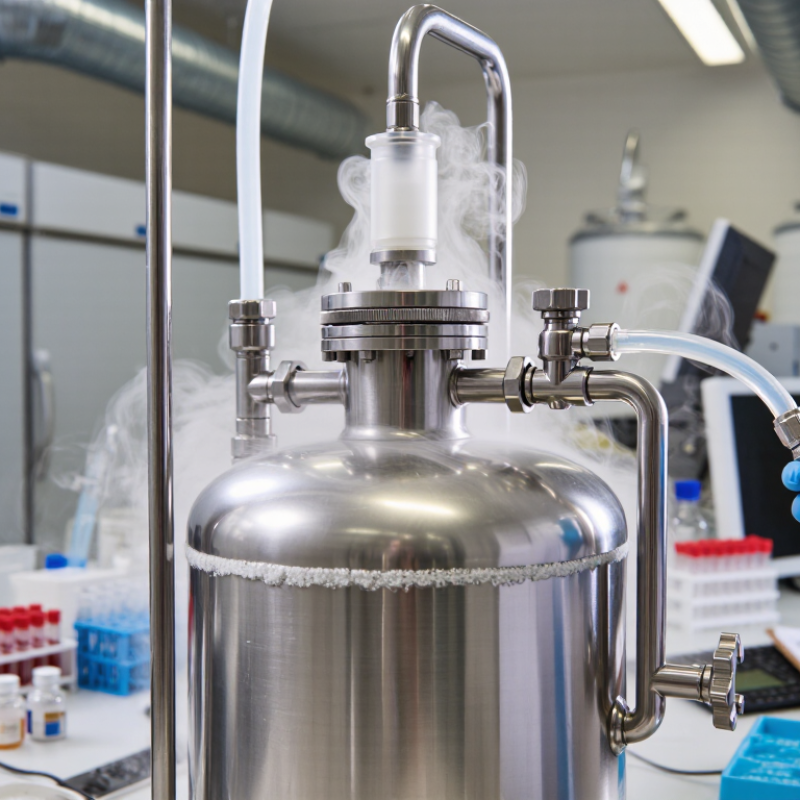
ISBER’s 2024 Best Practices for Repositories emphasizes validated monitoring, documented maintenance, alarm response, and controlled access. The World Health Organization’s Laboratory Biosafety Manual also stresses risk assessment and equipment reliability. These principles matter when a tank stands beside crowded laboratory benches, with frost forming around its neck and vapor escaping during refilling. Industry analyses, including Grand View Research’s cryogenic equipment reports, indicate continued market growth driven by biobanks, hospitals, pharmaceutical research, and reproductive medicine. Yet market forecasts differ. Definitions differ too. That uncertainty deserves attention.
Cryopreservation researcher Dr. John G. Baust has stated, “Cryopreservation is not simply freezing; it is a controlled biological process.” His point is practical. A suitable system must match sample volume, storage duration, access frequency, facility ventilation, and emergency capacity. A small laboratory may need a compact vapor-phase unit with reliable autonomy. A high-throughput biobank may require automated inventory control and redundant supply planning.
Do not select by capacity alone. Measure real consumption.
The strongest decision combines operating experience, manufacturer validation, service coverage, and lifecycle cost. It should also test uncomfortable questions: What happens during a weekend alarm? How quickly can samples be transferred? Can staff recognize oxygen-deficiency risks? No system is perfect. Careful planning simply makes failure less likely.
Define Storage Requirements and Sample Protection Goals
Before comparing storage systems, define what the samples require. Record sample type, container dimensions, current quantity, and expected growth. A box of small cryovials needs a different layout from tall specimen tubes. Decide whether samples may contact liquid nitrogen, or whether vapor-phase storage better fits their protection goals. Check validated protocols for temperature limits and handling requirements rather than relying on a general rule.
Small details matter. Estimate usable capacity, not just the stated maximum; racks, canisters, and retrieval space reduce room. Note how often staff will open the system and how quickly they can respond to alarms. If samples are irreplaceable, plan for backup storage, temperature monitoring, and a documented transfer process during equipment failure. A simple inventory map can help staff retrieve samples without prolonged searching. It may feel excessive at first. Yet an occasional busy day can expose gaps in access planning, so test the workflow before committing to a system.
How to Choose the Right Liquid Nitrogen Storage System?
Define storage requirements and sample protection goals
Liquid nitrogen boils at approximately −196°C at standard atmospheric pressure. Vapor-phase systems have temperature gradients that vary by design, loading, and position; many sample-protection protocols use −150°C or colder as a vapor-phase target. Confirm temperature uniformity, usable capacity for your vial format and inventory, and monitoring and alarm requirements before selecting a system.
Compare Liquid Nitrogen Tank Types and Insulation Designs
Liquid nitrogen storage systems differ in how they balance access, capacity, and evaporation control.
Wide-mouth dewars make it easier to retrieve samples with racks or tongs, but frequent opening allows more heat to enter. Narrow-neck vessels reduce exposure and can limit nitrogen loss during routine storage. They are less convenient when samples need regular handling.
Access matters.
Pressurized tanks serve a different purpose:
they can supply liquid or gas through a valve, making them useful for repeated dispensing. Their pressure rating, relief devices, and intended operating method must match the application. For small laboratories, a compact dewar may be simpler; high-volume users may need a larger vessel with suitable delivery connections.
Insulation design also affects performance.
Vacuum-jacketed tanks use an evacuated space, often with reflective layers, to slow heat transfer. Vacuum integrity and the neck opening matter; even good insulation cannot eliminate boil-off.
Foam-insulated designs may suit some short-duration transport needs, but their hold time should be checked against actual use.
Not always better.
Compare the stated evaporation rate, usable capacity, and required refill interval, then consider where the tank will sit and how often its lid or valve will be opened. It is easy to focus on capacity and overlook daily handling.
Evaluate Safety Systems, Monitoring, and Ventilation
Choosing a liquid nitrogen storage system should begin with safety, not capacity alone. A larger tank is not automatically safer. Review pressure-relief design, vacuum insulation, and transfer-line condition before comparing storage volume. Liquid nitrogen evaporates continuously, even when equipment appears quiet. That detail matters. A blocked vent can create dangerous pressure inside a sealed container.
Ventilation requires a room-specific assessment. Estimate the possible nitrogen release, then compare it with room volume and air-exchange performance. Exhaust air should discharge safely, while makeup air prevents stagnant areas. Do not rely on an open door. Install oxygen-deficiency monitors where people work and where airflow patterns may trap cold vapor. Alarms should be both visible and audible. Independent monitoring may be wise when one sensor failure could conceal danger. A qualified safety professional should verify sensor placement and emergency thresholds.
Ask how alarms are tested, recorded, and escalated after hours. Monitoring without a response plan is only decoration. Set inspection intervals for alarms, vents, relief devices, and backup power. Train staff to recognize frost, unusual hissing, oxygen alarms, and restricted access. Keep emergency routes clear. I would also challenge the purchasing checklist: it often measures tank size better than human safety. That imbalance deserves correction. A practical evaluation should include maintenance access, staff training, documented checks, and applicable local safety requirements. Even a well-designed system can become unsafe when small warning signs are ignored.