Blog

Why Choose China Top Barite Radiation Shielding Drywall?

Why Choose China Top Barite Radiation Shielding Drywall?

Choosing the right Barite Drywall Radiation Shielding requires more than comparing product prices. It requires density control, reliable testing, careful installation, and clear technical documentation. China’s experienced manufacturers increasingly combine barite aggregates with high-density gypsum boards for hospitals, diagnostic rooms, dental clinics, and research facilities. These panels can provide practical radiation attenuation while reducing the mess and labor associated with traditional wet shielding materials.

Radiation-shielding specialist Dr. Donald A. Cool emphasizes, “Effective protection depends on design, material selection, and verification—not weight alone.” This principle matters. A heavy board may still perform poorly if its density varies or its joints remain open. Quality suppliers should provide measured density, thickness tolerances, test reports, installation guidance, and batch traceability. Ask for samples. Inspect the edges.

A strong Chinese supplier can offer customized panel sizes, stable production capacity, and competitive logistics. Some factories also support project-specific calculations through qualified radiation-protection consultants. However, “top” should never mean “cheapest.” That assumption needs questioning. The final performance depends on room layout, radiation energy, workload, wall structure, and local safety requirements. Independent review remains valuable.

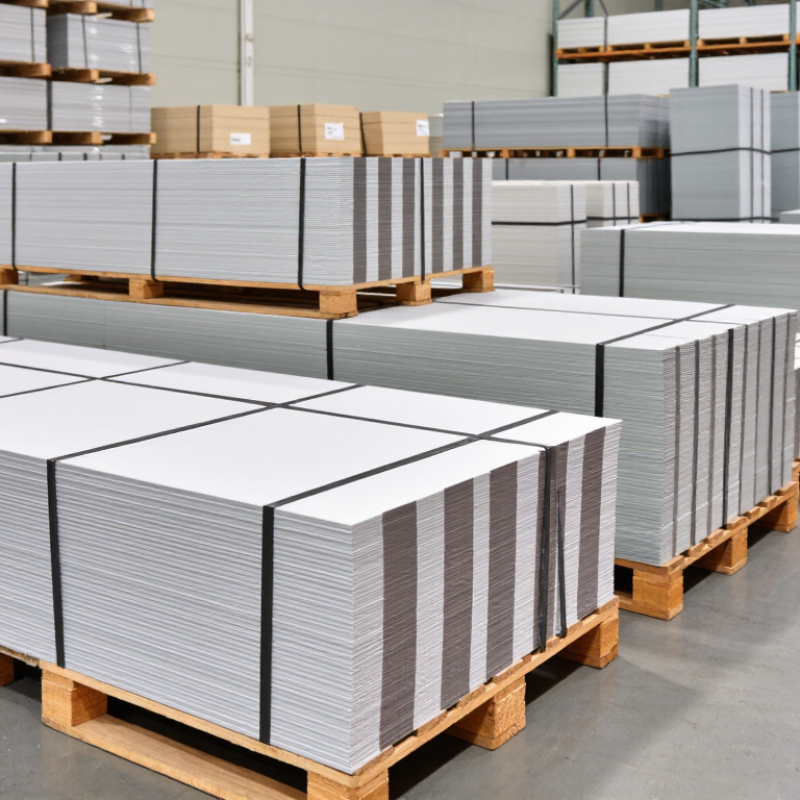
When evaluating Barite Drywall Radiation Shielding, buyers should examine manufacturing experience, laboratory records, raw-material consistency, and after-sales support. Look for visible details: clean board surfaces, compact edges, secure packaging, and readable labels. A dependable supplier does not promise impossible protection. It explains limitations, recommends professional verification, and helps create a safer, more accountable shielding system.
Why Choose China Top Barite Radiation Shielding Drywall?

What Is China Top Barite Radiation Shielding Drywall?

China top barite radiation shielding drywall is a dense wall panel designed to reduce scattered X-rays and other diagnostic radiation. Its core or coating contains barite, a mineral form of barium sulfate. Barite adds mass, helping the wall absorb radiation more effectively than ordinary gypsum board.

It is commonly used in medical imaging rooms, dental clinics, laboratories, and testing areas. The required thickness depends on radiation energy, equipment workload, room layout, and local regulations. A thicker panel is not automatically the best solution. Engineers should calculate shielding requirements before selecting materials. Small gaps can also weaken protection. Joints, corners, sockets, doors, and pipe openings need careful treatment.

Reliable products should have clear density data, dimensional tolerances, test reports, and installation guidance. Experienced installers check the supporting frame because barite drywall is heavier than standard board. They also handle panels carefully to prevent cracks and edge damage. The wall should be inspected after installation, especially around seams and service penetrations.

It is not a magic wall.

A practical mistake is treating product weight as proof of shielding performance. Weight matters, but verified attenuation data matters more. Project teams should compare test methods, confirm compliance with applicable building and radiation-safety standards, and request professional inspection when necessary. Performance can change when design assumptions are wrong.

How Barite Drywall Blocks Medical and Industrial Radiation

Why Choose China Top Barite Radiation Shielding Drywall?

How Barite Drywall Blocks Medical and Industrial Radiation

Barite drywall uses gypsum reinforced with barite, a dense mineral rich in barium sulfate. Its weight reduces the passage of diagnostic X-rays and some industrial radiation. It is not a magic wall. The board does not absorb everything, and that distinction matters.

In a medical imaging room, panels can line walls, ceilings, and selected doors. Tight joints prevent weak paths around sockets, corners, and service openings. In industrial inspection areas, shielding thickness must match equipment energy, workload, and distance. More thickness is not automatically better. A qualified radiation physicist should calculate the layout before installation.

On site, installers should stagger seams and seal penetrations with compatible shielding materials. Small details matter. Poor alignment can create narrow leakage routes near conduits. Moisture control also deserves attention, because damaged boards may lose strength and fit. Field experience often reveals a common mistake: projects focus on panel density while overlooking service openings. Acceptance testing with calibrated instruments can confirm the finished room’s performance. Results should be documented against applicable safety standards.

Key Materials and Structural Features of Barite Shielding Panels

Why Choose China Top Barite Radiation Shielding Drywall?

Barite shielding panels rely on dense barium sulfate aggregate, usually blended into a gypsum-based core or cementitious board. Barite increases mass without using lead, while gypsum helps create a workable, fire-resistant panel. The exact shielding value depends on barite purity, aggregate distribution, panel density, and thickness. These details deserve laboratory verification.

Structurally, panels often use a dense inner layer, reinforced edges, and smooth faces for tight joint installation. Staggered seams can reduce direct radiation paths between boards. Around doors, sockets, pipes, and corners, carefully fitted pieces are essential. A small gap can matter. Fixings should maintain panel contact without crushing the core.

Experienced project teams compare test reports with the room’s radiation energy, workload, distance, and required protection level. They also inspect panel weight, moisture resistance, dimensional stability, and cutting behavior before installation. China’s manufacturing sector offers different panel compositions and thicknesses, but “top” performance should never rely on appearance alone. A practical warning: density by itself is not enough. Poor joints can weaken an otherwise strong design. Independent review by a qualified radiation protection specialist remains necessary, and local regulations should guide final specifications.

How to Select and Install China-Made Barite Drywall

Why Choose China Top Barite Radiation Shielding Drywall?

How to Select and Install China-Made Barite Drywall

Selecting China-made barite drywall starts with the room, not the panel. IAEA Safety Reports Series No. 47 identifies workload, distance, occupancy, and use factor as key shielding inputs. NCRP Report No. 147 also separates primary and secondary barriers. Ask a qualified medical physicist to calculate the required thickness for the actual X-ray equipment and operating schedule.

Request batch-specific test reports, panel thickness, density, compressive strength, and radiation attenuation results. Confirm the testing energy range, because performance at one kVp may not represent another. ASTM C1396/C1396M covers gypsum panel requirements, but it does not replace project-specific shielding verification. Check moisture resistance too, especially near wash areas.

Installation needs careful handling. Verify wall framing can carry the added weight before delivery. Keep joints tight, stagger seams, and seal screw holes and service penetrations with compatible shielding compound. Do not align electrical boxes on opposite sides of the wall. A common shortcut is choosing the thickest board. It feels safer, but it may overload the structure and waste room space. In field reviews, the weakest point is often a forgotten joint, not the center of the panel. I would recheck every penetration before closing the wall.

Quality Standards, Safety Factors, and Common Applications

Why Choose China Top Barite Radiation Shielding Drywall?

Quality begins with verified material performance, not a product label. Barite radiation shielding drywall should have documented density, thickness, dimensional tolerance, and radiation attenuation results. Test reports must identify methods, sample conditions, and laboratories. ISO 9001 may support factory process control, but it does not prove shielding performance. Buyers should also request batch records and inspect board surfaces for cracks, warping, or uneven edges.

Safety depends on the complete room design. A dense wall can still fail around joints, doors, windows, sockets, and pipe openings. Shielding calculations should match the equipment energy, workload, room layout, and local regulations. A qualified radiation protection specialist should review the drawings. Installation crews need clear overlap details and compatible joint materials. The weak point is often human. Small gaps are easy to miss.

These boards are commonly used in diagnostic X-ray rooms, dental clinics, veterinary facilities, CT areas, and selected laboratory spaces. They can reduce wet construction and simplify refurbishment. However, thicker is not always better. Excess weight may affect framing, lifting, and fire performance. Moisture exposure can also damage paper-faced surfaces if storage is careless. China-based suppliers can offer useful production capacity, but purchasers should compare independent test evidence, technical support, packaging quality, and delivery consistency. A second inspection may reveal what a sales sheet leaves out.

Radiation Shielding Materials Guide
Why Choose China Top Barite Radiation Shielding Drywall? - Quality Standards, Safety Factors, and Common Applications
Technical comparison of typical barite-based drywall characteristics, verification requirements, and application considerations.
Category Data Dimension Typical Data or Benchmark Quality, Safety, or Application Significance
Material Composition Primary shielding aggregate Barite, primarily barium sulfate (BaSO4), incorporated into a gypsum-based or cementitious core The high density and relatively high atomic number of barium help attenuate diagnostic X-ray and gamma radiation. The actual performance depends on formulation, thickness, density, and radiation energy.
Physical Properties Panel thickness Common project configurations include approximately 12.5 mm, 15 mm, 18 mm, and 20 mm; custom thicknesses may be produced Thickness must be selected from a radiation-shielding calculation rather than a general rule of thumb. Multiple layers may be used when greater attenuation is required.
Physical Properties Typical density range Approximately 1.8–2.4 g/cm³ for dense barite-containing boards, subject to product formulation and manufacturing tolerances Density affects attenuation and structural loading. Each production lot should be checked against the declared value using documented test methods.
Shielding Performance Lead-equivalent or attenuation rating Must be reported for a specified radiation spectrum, tube voltage or photon energy, thickness, and test geometry; there is no single universal value for all applications A product certificate should state the test energy, measurement method, sample thickness, density, and uncertainty. Lead-equivalent values should not be transferred between different energies without technical justification.
Quality Standards Gypsum panel manufacturing and installation references ASTM C1396/C1396M may be relevant to gypsum panel requirements, while ASTM C840 may be relevant to gypsum panel installation; applicability depends on the product construction and project specification General gypsum standards do not by themselves prove radiation-shielding performance. The project should require a separate shielding test report and installation specification.
Radiation Testing Verification method Laboratory attenuation testing or lead-equivalence testing under a defined X-ray or gamma-ray energy range, with traceable instrumentation The report should identify specimen thickness, density, beam quality, source-to-detector geometry, exposure conditions, results, and measurement uncertainty.
Dimensional Quality Thickness, length, width, squareness, and edge condition Values should comply with the approved product specification and declared manufacturing tolerances Dimensional variation can create gaps, uneven joints, or reduced overlap, which may compromise both shielding continuity and finish quality.
Structural Safety Dead-load consideration A 2.4 m × 1.2 m panel at 20 mm thickness and 2.0 g/cm³ density weighs about 115 kg before framing and finishing materials Wall framing, floor loading, anchors, lifting methods, and handling procedures must be designed for the actual panel mass. Mechanical assistance may be required.
Safety Factor Design margin for shielding A project-specific design margin is commonly applied to account for construction tolerances, penetrations, occupancy changes, and calculation uncertainty; the value must be set by the qualified radiation-physics consultant or authority having jurisdiction A generic percentage cannot replace a shielding assessment. The design should address primary barriers, secondary barriers, workload, use factor, occupancy factor, distance, and adjacent occupied areas.
Installation Safety Joints, corners, penetrations, and service openings Use staggered joints, tightly fitted corners, compatible shielding treatment, and approved details around conduits, ducts, sockets, doors, and viewing windows Small discontinuities can create leakage paths. Drawings should include enlarged details for all openings and transitions between different shielding materials.
Moisture and Durability Environmental exposure Suitable for controlled interior environments when protected from persistent water exposure; moisture-resistant construction may be required in damp areas The product specification should define water absorption, dimensional stability, storage conditions, and acceptable temperature and humidity ranges where relevant.
Fire and Indoor Environment Fire reaction and emissions Gypsum-based products are generally non-combustible or have favorable fire characteristics, but the complete wall assembly must be tested or classified as specified by local building regulations Do not infer a fire-resistance rating from the board alone. Review the full assembly, joint treatment, framing, fasteners, finishes, and local code requirements.
Common Applications Medical diagnostic rooms X-ray rooms, computed tomography rooms, fluoroscopy rooms, dental X-ray rooms, mammography rooms, and veterinary diagnostic areas The required shielding depends on equipment workload, operating voltage, beam direction, room layout, and the occupancy of surrounding spaces.
Common Applications Industrial and research facilities Non-destructive testing rooms, laboratory imaging areas, radiation laboratories, and selected isotope-handling spaces Higher-energy sources may require concrete, steel, lead, specialized composites, or a multilayer system instead of barite drywall alone.
Documentation Recommended supplier submittals Technical data sheet, batch or lot identification, density and dimensional records, radiation test report, safety data information, installation guide, and packing inspection record Complete documentation supports incoming inspection, traceability, regulatory review, and confirmation that delivered panels match the approved design.
Selection Guidance Key purchasing criteria Verified attenuation data, controlled density, dimensional consistency, suitable mechanical strength, complete installation details, export packaging, and compliance with the project specification “Top” performance should be established through independent test evidence and project compliance, not by country of origin or marketing claims alone.
Important Design Note
Radiation shielding thickness and safety margins must be calculated for the specific equipment, workload, radiation energy, room geometry, occupancy, and applicable local regulations. Final designs should be reviewed and approved by a qualified medical physicist, radiation-protection professional, structural designer, or the relevant authority having jurisdiction.