Long, awkward materials can turn a clear warehouse aisle into a daily obstacle. A Cantilever Rack offers open access to stored goods, without front columns blocking long loads. Steel pipe, timber, metal sections, and sheet materials are common examples. Arms, uprights, bracing, and base plates work together to support them. Small details matter.
This guide compares 10 cantilever rack options for warehouse storage, focusing on practical features rather than broad promises. It considers load capacity, arm adjustment, rack height, finish, installation needs, and the types of materials each system may suit. A rack’s stated capacity is useful, but only when the load is arranged as specified and the floor and structure are suitable. Check manufacturer documentation and consult a qualified storage professional when site conditions are uncertain.
The best choice depends on more than price. A lumber yard with long, uneven bundles has different needs from a warehouse storing uniform steel tubing. Measure the available space, consider forklift access, and think about how stock will be handled during a busy shift. There is no perfect rack for every building. Even a well-reviewed model may not fit your layout, and that is worth admitting before purchase. Use this comparison as a starting point for evaluating durable, accessible storage and asking better questions before choosing a system.
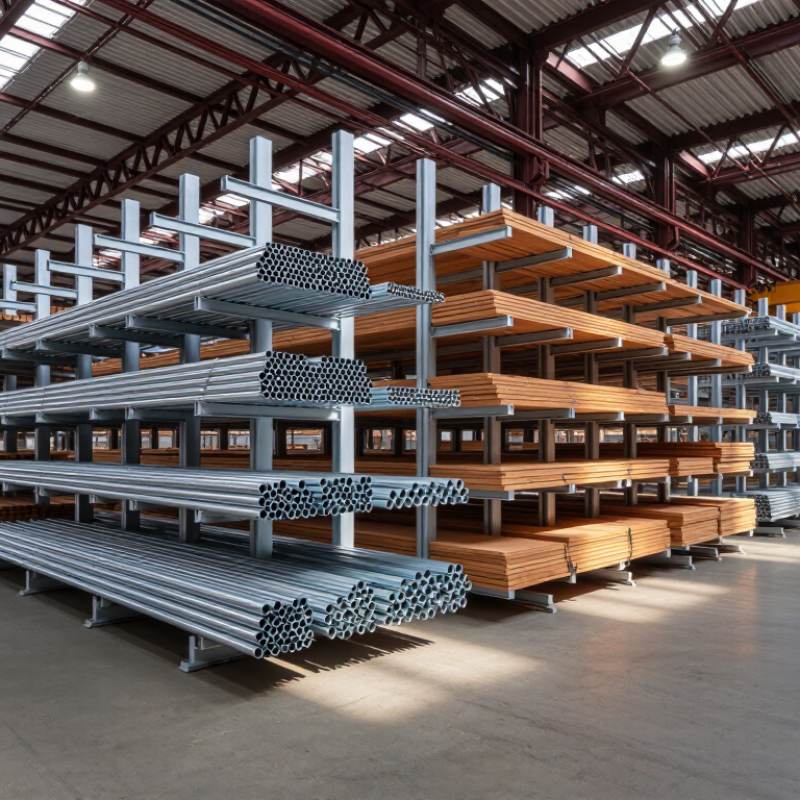
Cantilever racks use vertical columns, horizontal arms, and a stable base to store long or bulky goods. Unlike shelving with front posts, their open faces make it easier to load items from the aisle. This design suits lumber, steel tubing, trim, and other materials that do not fit neatly on standard pallets. The open layout is useful, but it does not make every load easy to handle.
In a warehouse, rack selection should start with the material, not the available floor space. A bundle of pipe may need longer arms than boxed stock, while heavy pieces require careful attention to rated capacity and load distribution. Measure the longest items and check forklift turning room. Measure twice. A small clearance error can make daily loading awkward.
Column spacing, arm length, and rack height all affect access and stability. Installers should assess the floor and anchoring requirements, then position loads evenly across the arms. Keep heavier materials at lower levels when practical, and avoid letting long stock project into travel paths. That matters. Regular checks can reveal bent arms, loose connections, or damaged uprights before they become bigger concerns. Specifications deserve attention, though real warehouse traffic can expose layout problems that a drawing misses. Revisit the arrangement after operations begin.

Cantilever racks are commonly used to store long, bulky materials such as lumber, pipe, and rebar. The chart shows example stock-length ranges in feet; actual lengths vary by product specification and supplier.
Use the longest load to help plan rack arm and bay dimensions. Have rack capacity and configuration verified for the actual load, spacing, and site conditions.
When comparing cantilever racks, start with the load—not the advertised capacity alone. Check the rated capacity per arm and upright, then confirm it matches each item’s weight and length. Loads should sit evenly across the arms; a bundle resting mostly on one end can create a very different demand. Measure the longest stock, too. A few extra inches can affect aisle clearance and forklift turns.
Adjustable arms help when storing mixed lengths, while fixed arms may suit a stable inventory. Compare column height, base depth, bracing, anchoring requirements, and finish for the warehouse environment. The Rack Manufacturers Institute’s ANSI MH16.1 standard provides engineering criteria for industrial steel storage racks; ask suppliers for design documentation and installation requirements.
Details matter. MHI’s 2024 Annual Industry Report found that 55% of surveyed organizations planned to increase supply-chain technology investment. If forklifts or future automation will share the aisles, check clearances and equipment paths before fixing the layout.
I would not choose on capacity charts alone; real loads and handling patterns can expose gaps those charts miss.
The best cantilever rack depends on what your warehouse stores and how it handles stock. For short, light bundles, a compact, single-sided rack can fit along a wall and keep picking straightforward. Long lumber, pipe, or sheet goods may need deeper arms and stronger uprights. When forklifts load bulky materials, double-sided racks can use floor space efficiently, provided aisles remain wide enough for safe turns. Adjustable arms help accommodate changing inventory, but they do not increase the rack’s rated capacity. Check the load rating for each arm and upright, and confirm anchoring requirements before installation. Measure twice. A common planning mistake is choosing by height alone; arm length and floor conditions matter, too.
Tips: Measure the longest load, including any overhang, and note its weight before comparing racks. Store heavier items on lower arms, distribute loads evenly, and keep labels visible. If the floor is uneven or the loads are unusually heavy, ask a qualified professional to review the layout. Small details can change the choice.
For outdoor storage, weather-resistant finishes may help protect the rack, but inspect them regularly for damage and corrosion. A hand-loaded setup may suit occasional access, while forklift-served storage needs clear approach space and rack protection suited to the site. There is no perfect setup. Recheck your choice when stock changes; estimates made during planning can miss awkward lengths or uneven bundles.
| Rack Type | Best For | Typical Item Length | Suggested Arm Length | Illustrative Load per Arm | Planning Notes |
|---|---|---|---|---|---|
| Light-Duty Single-Sided Rack | Hand-loaded trim, small pipes, and packaged building materials | 1–3 m | 0.6–1.2 m | 100–250 kg | Suitable for low-volume storage and picking from one aisle side; confirm arm spacing against the load. |
| Medium-Duty Lumber Rack | Boards, dimensional lumber, and bundled wood products | 2–6 m | 0.9–1.5 m | 250–500 kg | Use level, evenly distributed bundles and appropriate restraints to limit shifting or rolling. |
| Heavy-Duty Steel Rack | Steel bars, structural sections, and metal profiles | 3–12 m | 1.2–2.1 m | 500–1,000 kg | Check the rack’s total upright and base capacity as well as the arm rating; long loads may need several support points. |
| Pipe and Tube Rack | Metal or plastic pipe, conduit, and tubing | 3–12 m | 1.2–2.1 m | 300–800 kg | Consider end stops, dividers, or cradles to prevent round products from rolling off the arms. |
| Sheet-Goods Cantilever Rack | Panels, sheet stock, and other flat materials stored horizontally | 1.2–3 m | 0.9–1.5 m | 250–600 kg | Decking or support surfaces can help distribute loads; verify panel dimensions and support spacing. |
| Double-Sided Cantilever Rack | High-volume storage of long stock accessed from two aisles or sides | 2–12 m | 0.9–2.1 m per side | 250–1,000 kg | Account for loads on both sides when sizing the upright, base, and floor anchorage. |
| High-Bay Cantilever Rack | Long products stored vertically in facilities with tall clear heights | 3–12 m | 1.2–2.1 m | 500–1,000 kg | Rack height, forklift reach, bracing, floor capacity, and anchorage should be assessed as a complete engineered system. |
| Compact-Aisle Cantilever Rack | Space-conscious storage of shorter stock and moderate-length materials | 1–6 m | 0.6–1.2 m | 200–500 kg | Check that the selected handling equipment can safely turn, reach, and place loads in the available aisle width. |
| Outdoor Galvanized Cantilever Rack | Weather-exposed storage of lumber, pipe, and construction materials | 2–12 m | 1.2–2.1 m | 300–800 kg | Specify corrosion protection for the site conditions and account for wind, drainage, and surface preparation. |
| Adjustable-Arm Cantilever Rack | Warehouses storing mixed product sizes or changing inventory profiles | 1–12 m | 0.6–2.1 m | 200–800 kg | Adjustable arm positions allow flexible spacing, but each configuration must remain within the rack’s rated limits. |
Important: Load figures and dimensions above are illustrative planning ranges, not certified ratings. Actual capacity depends on the rack design, arm spacing, load distribution, anchorage, floor conditions, and handling method. Confirm final specifications with a qualified rack designer or supplier before installation.
Cantilever racks suit long, bulky stock such as pipe, timber, and sheet material. Their open fronts make loading easier, but capacity depends on the full configuration. Check the rated load for each arm and upright, not just the rack’s overall figure. Arm length, upright spacing, and how weight sits on the arms all matter. Keep loads centered and within the specified limits.
Plan for real warehouse conditions. A bundle may shift when a forklift lifts it, and uneven loads can place extra stress on one arm. Use suitable end stops where required, and keep aisles clear enough for the equipment and materials being handled. End stops are not a replacement for careful loading. Inspect arms, connections, and uprights regularly for impact damage, loose fittings, or visible bending. Small defects deserve attention.
Installation starts with the floor. Confirm that the slab can support the rack and its stored loads, then use anchors and fixing methods specified for the system and site. Floor condition, concrete thickness, and local requirements can change what is suitable. Have a competent installer check alignment, anchoring, and stability before the rack is loaded. A neat drawing can still miss a rough floor or a forklift’s turning space; that detail is easy to underestimate.
Match the rack to the material, not just the floor plan. Measure the longest items, their bundle width, and the heaviest expected load. Measure twice. A six-meter pipe needs more than a six-meter bay; allow room for safe handling and slight overhang. Sketch column positions, doors, docks, and forklift routes before choosing rack length. Space is unforgiving. A rack may fit on paper but leave a forklift unable to turn cleanly at the aisle end.
Check ceiling height and the usable space between rack arms. Cantilever arms should support the load at suitable points, with rated capacity verified for the actual configuration. Do not assume every arm carries the same weight when loads are uneven. Long lumber, steel sections, and sheet goods may need different arm spacing and support arrangements. Leave clear access to emergency routes and building equipment, and confirm floor capacity with a qualified professional when loads are substantial. A rough sketch often misses small obstructions, such as a low beam or a door that swings into the aisle. Recheck the layout with real load dimensions before installation, especially if inventory changes seasonally.