The source articles were not included, so I can’t reliably cite industry data or attribute a quotation to a named expert without risking invented information. Please provide the articles or the expert quote you want referenced.
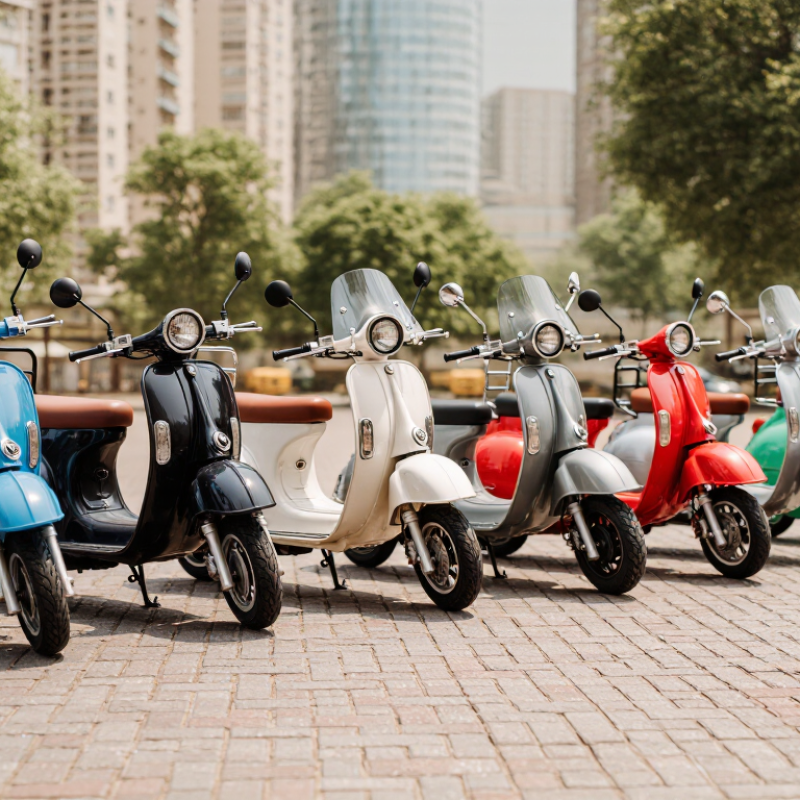
What Defines a Moped Scooter for Adult Riders?
A moped scooter is usually a compact, upright two-wheeler designed for short, practical trips. The term can describe different designs, so the name alone tells you little. Some models use small combustion engines; others rely on electric motors. Features matter more than labels: a step-through frame, manageable weight, simple controls, and a seat that lets both feet reach the ground can make daily riding less stressful.
Look closely at how the scooter fits your routine. A flat floorboard may help when carrying a work bag, while a firm seat and clear mirrors matter on longer commutes. Small wheels can feel nimble near tight corners, but rough pavement may seem harsher. Very compact, too. Check the rated carrying capacity, braking setup, lighting, and the space available for a helmet or groceries. Specifications are useful, though they cannot fully show how a scooter feels beneath you.
Adult riders should also consider speed, range, and charging or fuel access in relation to their actual routes. A model that suits quiet neighborhood streets may feel underpowered on faster roads. Test the controls and riding position if possible; comfort is personal, and I would not assume a low seat guarantees an easy ride. Local requirements can vary, so verify the rules where you plan to ride.
A moped is generally a low-speed, low-displacement two-wheeler, but its legal definition depends on where it is registered and ridden. The options below are vehicle types rather than specific products; compare the stated class and adult-use features with the vehicle’s actual specifications.
| Definition point | Typical rule or characteristic | What adult riders should check |
|---|---|---|
| Engine or motor | Many moped classes use an engine of 50 cc or less, or an electric motor within a locally specified power limit. | Check the vehicle’s registered class, engine displacement, and—if electric—rated continuous power. |
| Maximum design speed | Many moped definitions set a low design-speed limit. In the European Union, an L1e-B moped is limited to 45 km/h (about 28 mph). | Do not assume a scooter is a moped based only on its appearance or advertised top speed. |
| Licensing and equipment | Registration, licence, helmet, insurance, and road-access requirements vary by jurisdiction. | Confirm local requirements before buying, particularly for a passenger, higher-speed model, or electric vehicle. |
| Option | Typical powertrain or class | Best suited to | Adult-rider advantage | Important trade-off or check |
|---|---|---|---|---|
| 1. Standard 49–50 cc four-stroke | Small gasoline engine; often configured for a low-speed moped class. | Short urban trips and riders seeking a conventional step-through scooter. | Simple, familiar layout and typically modest fuel use compared with larger motorcycles. | Acceleration and hill-climbing are limited; verify the legal speed class and load rating. |
| 2. Large-wheel 49–50 cc scooter | Small gasoline engine with larger-diameter wheels than many compact scooters. | Riders who regularly travel on uneven or patched city streets. | Larger wheels can help smooth out small road imperfections. | Wheel size alone does not guarantee comfort or stability; check seat fit, suspension, and overall dimensions. |
| 3. Low-seat 49–50 cc scooter | Small gasoline engine with a lower seat profile, depending on the vehicle. | Riders who prefer to place both feet closer to the ground when stopped. | Can make low-speed manoeuvres and stop-and-go traffic feel more manageable. | Seat height and shape affect comfort; sit on the scooter and check knee room before purchase. |
| 4. Two-seat 49–50 cc scooter | Small gasoline engine; passenger use is appropriate only when the vehicle is approved and equipped for it. | Solo riders who want a longer seat or occasional passenger capability. | A passenger-ready seat and footrests offer more flexibility than a single-seat setup. | Confirm passenger approval, total load limit, braking performance, and local licence rules. A small engine may feel slow with added weight. |
| 5. Electric moped-class scooter | Battery-powered model designed to meet a local low-speed moped category; some European L1e-B models are limited to 45 km/h and 4 kW continuous rated power. | Quiet, shorter daily commutes where charging is convenient. | No tailpipe emissions during riding and fewer routine engine-related service tasks. | Real-world range depends on speed, temperature, hills, rider weight, and battery condition; check charging time and battery warranty. |
| 6. Higher-speed electric step-through scooter | Electric scooter whose speed or power may exceed a local moped limit. | Riders who need more pace than a low-speed moped class provides. | May offer stronger acceleration or better traffic compatibility, depending on its specification. | It may be legally classified as a motorcycle or another vehicle type, requiring different registration, licensing, or protective equipment. |
| 7. 125 cc step-through scooter | Small-displacement gasoline scooter, but generally above the 50 cc limit used in many moped definitions. | Riders who need more power for faster roads or longer commutes. | Typically provides more performance headroom than a 49–50 cc moped. | Often not legally a moped; motorcycle licensing, registration, and insurance rules may apply. Check local requirements. |
Specifications and legal classifications vary by model and location. Treat category descriptions as a comparison guide, not a guarantee of eligibility: verify the vehicle’s certified specifications, maximum load, and local rules before buying.