Blog

2026 Top POY Spinning Line Manufacturers and Suppliers

The 2026 POY Spinning Line market is becoming more technical, competitive, and demanding. Manufacturers and suppliers now compete on speed, yarn consistency, energy use, automation, and after-sales support. A reliable line must perform steadily, not only look impressive in a showroom.

This guide examines leading POY Spinning Line manufacturers and suppliers through practical purchasing criteria. These criteria include melt-spinning technology, winding stability, production capacity, temperature control, component quality, and commissioning support. Attention also goes to real operating details, such as tension fluctuations, filter replacement intervals, spare-parts availability, and operator training. Small problems can become expensive production losses.

Experience matters here. A supplier may promise high output, but factory records and customer references deserve closer attention. Claims need proof. Technical brochures rarely show the full maintenance burden or the learning curve for new operators. This comparison therefore encourages readers to request test data, inspect installations, and clarify warranty responsibilities before signing a contract.

The selected companies are discussed according to their visible expertise, engineering capabilities, service networks, and manufacturing reliability. Regional strengths are also considered, since installation conditions and response times can differ significantly. No supplier is perfect. Even established manufacturers may have weaknesses in customization, delivery schedules, or technical communication. That limitation deserves honest attention.

By combining documented specifications with practical evaluation, this overview helps textile producers make a more informed decision. The best choice should fit the factory’s yarn targets, budget, workforce, and long-term expansion plans. Performance must be measured in daily production, not promises.
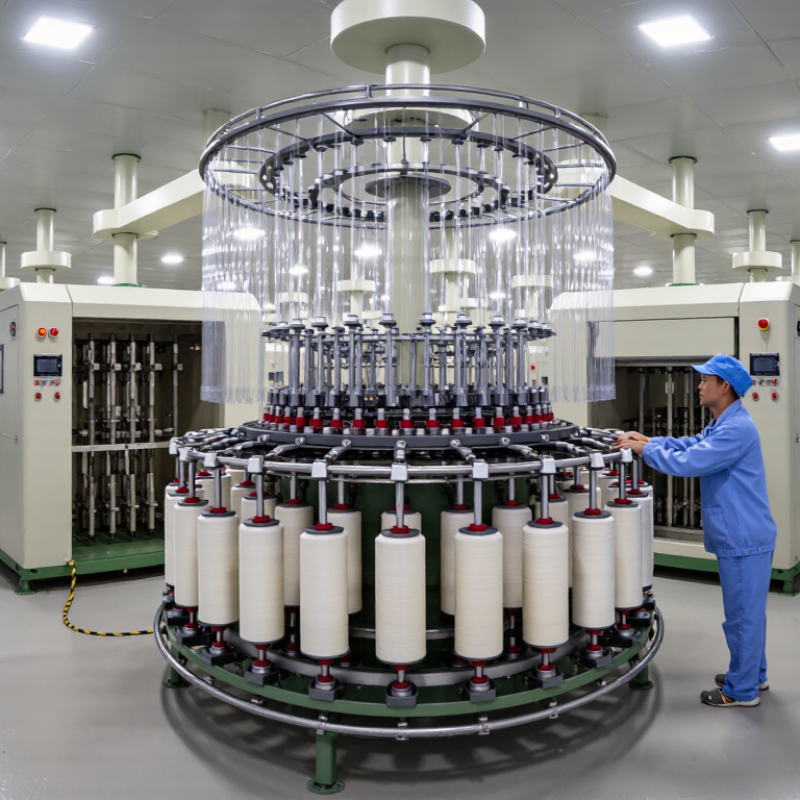
2026 Top POY Spinning Line Manufacturers and Suppliers

POY Spinning Lines: Definition, Applications, and Production Process

POY Spinning Lines: Definition, Applications, and Production Process

Partially oriented yarn, or POY, is a polyester filament yarn made through high-speed melt spinning. It has moderate molecular orientation and needs further drawing before many fabric uses. Textile Exchange’s Materials Market Report 2024 reported that polyester represented about 57% of global fiber production in 2023. This scale keeps POY equipment important for apparel, home textiles, automotive fabrics, and industrial mesh.

A typical POY spinning line dries polymer chips, melts them, and pushes the melt through a spinneret. Cooling air then solidifies hundreds of fine filaments. Godets control speed and tension before the yarn reaches the winding unit. The yarn can later become DTY for stretch fabrics or feed weaving and knitting operations. A line’s output depends on polymer quality, spinning speed, denier range, energy use, and winding stability. The Global Fiber Market Report 2024 also identifies polyester as the dominant synthetic fiber, although production estimates vary by methodology. That difference deserves attention.

Tips: Check laboratory data before selecting a supplier. Ask for denier uniformity, oil-pickup, breakage, and energy-consumption records. Inspect the cooling cabinet and tension system closely. Small temperature changes can create visible yarn defects. Experienced buyers should also test local maintenance skills, spare-part availability, and operator training. A cheaper line may become expensive when downtime reaches the winding section.

Core Equipment and Technologies Used in POY Spinning Lines

2026 Top POY Spinning Line Manufacturers and Suppliers

Core Equipment and Technologies Used in POY Spinning Lines

In 2026, POY spinning lines depend on stable thermal control and accurate material delivery. The process begins with polymer drying equipment, which reduces moisture before melting. The extruder then creates a uniform melt under controlled temperature and pressure. A precision metering pump maintains steady throughput. Fine filtration removes contaminants before the melt reaches the spinneret. Even small pressure changes can affect filament uniformity.

At the spinneret, hundreds of tiny holes shape the molten polymer into filaments. A controlled quench chamber cools them with filtered air. Air speed, temperature, and humidity require close adjustment. This stage is easy to underestimate. Godet rollers then draw and guide the filaments at carefully matched speeds. Surface-treated rollers can reduce friction and filament damage. Interlacing jets improve yarn cohesion before winding. The winding unit must produce firm, even packages without excessive tension.

Modern control systems connect temperature sensors, pressure gauges, speed drives, and yarn monitoring devices. Operators can trace changes across each position. That assumption can fail. Dust, vibration, worn seals, and unstable compressed air still create defects. Experienced technicians inspect filters, spinnerets, quench screens, and winding heads during routine checks. Supplier evaluation should include factory acceptance testing, spare-parts support, training, and process records. A line may meet its rated speed yet struggle with real production variation. Small deviations often appear only after extended operation.

Key Criteria for Evaluating POY Line Manufacturers and Suppliers

Choosing a POY spinning line manufacturer or supplier requires more than comparing equipment prices. Start with proven production experience in polyester yarn applications. Ask for documented output, denier ranges, winding speeds, and long-term operating records. Factory visits can reveal details that brochures often hide, such as vibration, floor cleanliness, and operator access.

Technical compatibility matters greatly. Review polymer flow control, spinning beam stability, cooling design, winding precision, automation, and energy consumption. A reliable supplier should provide installation guidance, operator training, preventive maintenance plans, and accessible spare parts. Request clear acceptance testing with measurable standards. Production samples should be tested for strength, elongation, evenness, and package shape. Claims without test data deserve caution. No evaluation is perfect. I would still question impressive figures if they lack independent verification.

Tips: Compare total ownership cost, not only the purchase price. Speak with current users about downtime and service response. Check whether software updates and technical support remain available after commissioning. Ask for a realistic delivery schedule, including customs and installation time. Also, examine warranty limits carefully. A low-cost line may become expensive when small failures interrupt continuous production. Suppliers should explain risks honestly, even when the answer is uncomfortable. Experiences from similar factories are useful, but each plant has different utilities, labor skills, and material conditions. Test assumptions before signing.

Top POY Spinning Line Manufacturers and Suppliers in 2026

Top POY Spinning Line Manufacturers and Suppliers in 2026

Top POY Spinning Line Manufacturers and Suppliers in 2026 are competing through higher output, stable yarn quality, and lower energy use. Textile Exchange’s Materials Market Report 2024 states that polyester represented about 57% of global fiber production in 2023. This share keeps demand for efficient POY equipment strong. ITMF’s 2023 machinery statistics recorded approximately 1.72 million new draw-texturing spindles worldwide. The figure shows continued investment across the filament yarn chain, although POY demand remains sensitive to apparel cycles and regional costs.

When comparing suppliers, buyers should inspect spinning speed, polymer residence time, winding accuracy, and automatic package change systems. A reliable line should maintain even denier during long production runs. Ask for measured energy consumption, not only estimated savings. Check spare-parts availability near the installation site. Technical training also matters. A fast machine without skilled support can create expensive stoppages. No supplier is perfect. Factory references deserve more weight than polished brochures.

Tips: Request production samples using your actual polymer and target denier. Review at least twelve months of maintenance records from comparable installations. Confirm warranty coverage, remote diagnostics, and response times in writing. Energy data should include heating, spinning, cooling, and winding systems. One detail is often missed: building layout can limit future capacity expansion. Allow space for additional positions, safer material handling, and practical maintenance access.

2026 POY Spinning Line Industry Benchmarks

This chart compares common polyester POY spinning line configurations by typical spinning speed and nominal daily output. The figures represent non-brand industry reference ranges used for preliminary equipment evaluation; actual performance depends on polymer quality, yarn denier, number of spinning positions, winding efficiency, and operating conditions.

How to Select and Purchase a POY Spinning Line Wisely

2026 Top POY Spinning Line Manufacturers and Suppliers

Selecting POY spinning line wisely starts with your product plan, not a supplier’s sales brochure. Define polymer type, denier range, daily output, winding speed, and future expansion needs. A line designed for 120 tons monthly may perform poorly at 300 tons. Ask for verified production records from comparable factories. Request energy use per kilogram, not only installed motor capacity. Small details matter.

Inspect the complete process route, including dryers, extruders, metering pumps, spinning beams, cooling systems, interlacing units, and winders. Check temperature stability during a long trial. Examine package hardness, yarn uniformity, waste rate, and doffing time. Require a factory acceptance test with agreed measurement methods. Vague promises create expensive arguments later. Very expensive ones.

Supplier evaluation should include engineering experience, spare-parts availability, operator training, software support, and maintenance response times. Speak with existing users, preferably in climates and production conditions similar to yours. Review the warranty line by line. Confirm which components are covered and how quickly replacements can arrive. A lower purchase price can hide higher downtime costs.

Plan the foundation, utilities, ventilation, compressed air, cooling water, and workshop access before signing. Include installation supervision and performance testing in the contract. One practical mistake deserves attention: buyers often calculate output but overlook warehouse space for finished packages. That oversight can delay production. Leave room for improvement, because actual yarn demand may not match the original forecast.